
Search
105 results found for "sheila zagula"


Hands-On Activities for Beginning, Middle and End of a Story
 Asking students to tell or write a story with a beginning, middle, and end is a daunting task for most. Teaching the narrative structure in a developmental fashion using the SGM methodology is a powerful tool to instruct students in language, comprehension, and writing. The SGM® is an iconic-based tool that (developmentally) represents the necessary elements of story grammar and story organization. We have received a great deal of positive feedback on our post from March 29, 2016, Fun Activity to Reinforce the “Kick-Off” using the Kick-Off icon and the book The Doorbell Rang...


Lessons & Activities for Feelings and Reactions
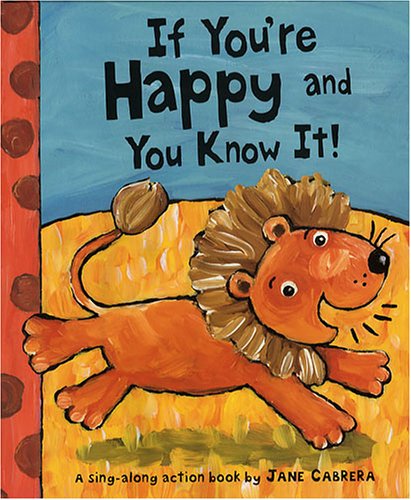 “If you’re happy and you know, clap your hands!” How many of us remember and still occasionally sing this old camp song? There are many versions of this song on YouTube that you could access as a jumping off point for a similar activity to the one described below or you may use books of your choosing if you cannot find the two books below in your local library. Read or sing If You’re Happy and You Know It by Jane Caberra to your students for enjoyment. Make a list of all the actions/activities mentioned in the book on the white board...


Read Across America Day & Dr. Seuss Lesson!
 As always, I began writing my lesson by gathering my focus book and Story Grammar Marker® Mini-Posters. Since the children enjoyed our recent Rosa Parks read aloud Who was Rosa Parks? written by Yona Zeldis McDonough, this week I chose Who Was Dr. Seuss? written by Janet B. Pascal from the same series. I planned the lesson to coincide with Read Across America Day on March 2, which is Dr. Seuss’ birthday. The lexile measure of this book is 820L. The following lesson suggestions were designed for grades 3 and 4. Lessons may be modified to meet your student’s needs. Many people ask how I go about creating lessons to use the SGM®. Really, it is the opposite thinking, as I always have asked myself: How can the SGM® be used to enhance the lessons I already do and target skills that I am trying to teach?...


Compare and Contrast Characters
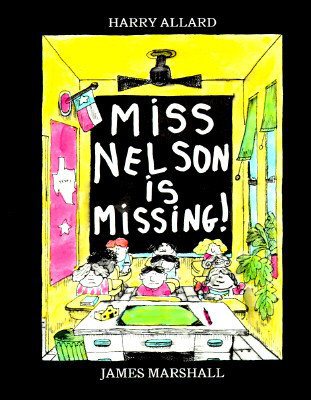 Miss Nelson Is Missing, written by Harry Allard and illustrated by James Marshall, is one of my favorites for comparing characters. It is a book that may be used at a variety of levels. Read the story for enjoyment. After, discuss the “two” characters, Miss Nelson and Miss Swamp.
Fill out individual character maps for each character or fill out one map for both characters as shown below which was done with a third grade class. Have children talk about the map(s) with one another.


Part 2: “Hilda Must Be Dancing” and “Giraffes Can’t Dance” — Compare and Contrast
 Review the two stories with the children using the narrative icons/map and present the Compare/Contrast Map on a white board (or chart paper, depending on your situation). I set it all up ahead of time.
Begin by explaining the map to the children. Then, suggest that we start thinking of ways the two stories are the same/different using the SGM retelling icons. Start with the Character icon. Ask the children how Hilda and Gerald are the same/different...


Character and Setting, Fun Activities
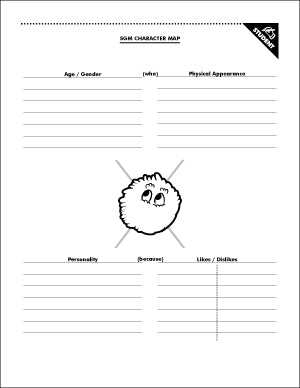

Are you looking for a quick lesson to reinforce the SGM or Braidy Character Map? Have students each fill out a character map or work with a partner to fill out the map in an interview format: • How old are you? • What best describes how you look? • What are you like as a person? • Are you friendly? • Are you curious? • What do you like (to eat, to do, etc.)? • What don’t you like?...


The Trumpet of The Swan
By E.B. White -- Names and physical description of Characters are generally not problematic for a child. However, personality traits, motivation, and perspectives are more difficult. Multiple characters may be difficult to hold in memory. Our Character maps help in this area (Braidy the StoryBraid map, Story Grammar Marker map).


Character Development, Six-Second-Stories™ and Jojo Siwa
 This past week my 5-year-old daughter Casey went to camp. On the first day, I suggested that she wear a T-shirt that depicts something she likes (LOL: Dolls, Unicorns, JoJo Siwa, Mermaids, Teenage Mutant Ninja Turtles, etc.) so that when she is meeting new friends, they can immediately know something she likes and ask her about it. She chose a T-shirt with a picture of “JoJo Siwa,” who is a young, popular performer. By wearing that, new friends will know a little about her as a “character” in a social setting. Upon arriving at camp, within 30 seconds, a Dad and daughter walked in and the Dad said, “You like Jojo Siwa? Avery and her mom saw Jojo Siwa in a concert this summer!”...


SLPs: Be Empowered to Collaborate!
 In the early 1970s, I began my work as a Speech/Language Pathologist in the Hartford, Connecticut Public Schools. The department head, Margaret Kennedy, an Iowa native, was trying to entice someone to teach a “Language Disabilities Class” at Dwight School in the South End. Language Disability was the new term in our field at that time. I had just gotten my Master’s Degree at Penn State and had an enlightening summer course in “language disabilities” under my belt. We used Helmer Myklebust’s text entitled Differential Diagnosis of Language Impairments, as our basic text and studied intervention methodologies such as the Association Method, developed at Central Institute for the Deaf in St. Louis, the ITPA, Auditory Discrimination in Depth (now known as Lindamood/Lindamood)...