



When No One There Is Like You: Exploring Feelings & “Belonging” with SGM
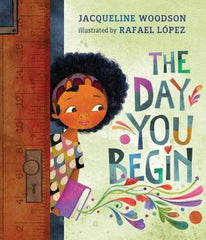 The Day You Begin, by Jacqueline Woodson and illustrated by Rafael Lopez, is a beautiful, nonlinear story to share with children, especially at the beginning of the school year. It encourages children to think about their feelings when entering new situations and creates an opportunity for teachers to provide a discussion with and to show support of children in such situations. Before sharing the selection, take a look at the following links for background information. This book is actually a story of a girl named Angelina, included with examples and guiding suggestions for fitting in, with which all of us can identify. Included below is also a link to the illustrator’s website, Rafael Lopez, discussing the development of the artwork for this book, which older students would find interesting...


Character Development, Six-Second-Stories™ and Jojo Siwa
 This past week my 5-year-old daughter Casey went to camp. On the first day, I suggested that she wear a T-shirt that depicts something she likes (LOL: Dolls, Unicorns, JoJo Siwa, Mermaids, Teenage Mutant Ninja Turtles, etc.) so that when she is meeting new friends, they can immediately know something she likes and ask her about it. She chose a T-shirt with a picture of “JoJo Siwa,” who is a young, popular performer. By wearing that, new friends will know a little about her as a “character” in a social setting. Upon arriving at camp, within 30 seconds, a Dad and daughter walked in and the Dad said, “You like Jojo Siwa? Avery and her mom saw Jojo Siwa in a concert this summer!”...


A POPCORN Lesson: “CORNY” Humor, Facts and Perspective Taking with SGM® and ThemeMaker®
 I saw this meme on Facebook recently and cracked up laughing at the “corny” humor! It just so happened that it was a 95-degree day here and I felt just like that popped stalk of popcorn—SO HOT! I am sure many of you can relate to the weather this summer. I actually Googled to see if that could actually happen—that popcorn would “pop” while still on the “ear.” First, I found a website Popcorn.org and realized there is WAY more to popcorn than I ever realized! Then, while using the Description Map from the ThemeMaker® Manual, I learned so much about popcorn. Popcorn is actually a member of the grass family—a specific kind of maize (corn)...


Tech Tuesday/Summer Study Series: Because and So Science
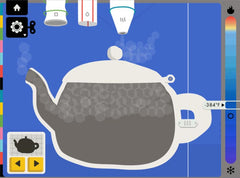 For July’s entry in the “Summer Study Series,” we’ll be looking at some cool connections to the science curriculum in addressing the macrostructure and microstructure of language. Our posts this summer are summarizing recent research related to narrative and expository language and Story Grammar Marker®/ThemeMaker® to give you some scientific thought for summer. To set the tone, there are some natural connections between the SGM® and ThemeMaker® methodologies and using science content with students. Narrative and expository elements give a framework for summarizing story and information, elaborating, focusing on main ideas and reducing the load on working memory by providing a scaffolded structure. The scientific method itself, moving from observation (Character/Setting), planning and hypothesizing, following experimental steps, and developing a conclusion, can be reframed using the Story Grammar Marker® as is demonstrated in the original SGM® manual...


Tech Tuesday/Summer Study Series: An Evidence-Based Approach to Building Inferential Skills through Narrative Texts

This summer we are bringing back the “Summer Study Series!” This series of posts will provide overviews of recent research related to narrative language and Story Grammar Marker® in order to give you “food for thought” to digest relevant to clinical techniques in the upcoming school year. I was quite excited to discover that a recent study on developing inferential language has a direct connection to SGM®, as MindWing’s icons were used in story mapping activities included as part of the studied intervention. Dawes, Leitao, Claessen and Kane (2019), developed and studied a specific intervention sequence for improving inferencing in students with Developmental Language Disorder (DVD). Some summarized points from the study are as follows...


Feelings Activities with Dr. Seuss “Cat in The Hat” and “Marco Comes Late”
 As you know, March 2nd is the birthday of Dr. Seuss. He was born right around the corner from our MIndWing office here in Springfield, MA. Yesterday, I visited the Springfield Library to get a copy of The Cat and The Hat so I could share a lesson suggestion related to feelings. Along with that book, I found a copy of Horton and the Kwuggerbugs and Other Lost Stories. These stories were originally published in Redbook magazine between 1950-1955. Charles Cohen, a collector of all things Seuss, put together four of these selections in this book. Following The Cat and The Hat activity is an SGM analysis of one of those stories: “Marco Comes Late”...