
Search
87 results found for "Maryellen Rooney Moreau"


April 16, 2020: Introduction to Expository (Information) Text, FB Live
Continuing our lessons on information text, I would like to feature Dr. Seuss’ book about the Spring Season, “Spring Seasons.” In it is a listing of many things that are spring! Seuss’ characters, Thing 1 and Thing 2, are present on each page as they show elements of the Spring Season. The final page is an illustration of all things spring. We also discuss “Wonderful Worms, ”Glaser/Krupinski...


April 9, 2020, Amid the COVID19 Pandemic, FB Live
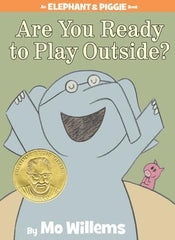 Today I want to show how authors always include information in their stories. We should look for it as we read. For instance, the information for the setting is a time and a place…BUT…what is happening at that time in that place is the important part for a story! The timing of a kick-off and how characters in the setting respond to the kick-off through feelings, thoughts, words and actions is finalized when the character makes a plan. How things turn out as a consequence depends on the actions (attempts) to carry out the plan and whether the plan is realized. I used the book, Are You Ready To Play Outside? by Mo Willems. This book is part of a series starring Gerald the Elephant and Piggy, the pig! I noted in my mini-lesson that you might want to look at this book for the concept that kick-offs (the rain) often occur gradually in many situations...


SGM® and G.R.E.E.N. Interactions for Social Literacy
Recent federal funding and educational research has highlighted the need for trauma-informed programs and trauma-sensitive approaches. For many years I have shared how Story Grammar Marker® can be used to help children in trauma to think about and express their “stories” (personal narratives) as well as how to think about kick-offs, feelings and plans in life. Story Grammar Marker® is aligned with trauma-informed care. SGM® is an effective tool to use with trauma-informed strategies for working on oral language development,  critical thinking, and social-emotional learning. In my research, I came across an article entitled “Want Your Children to be Kinder? Try This Assignment” by Justin Parmenter. The author encouraged his students to be “Undercover Agents of Kindness” as they each drew the name of a classmate and planned to perform a mission of kindness: “an unexpected act of kindness for the classmate.” After doing the unexpected act of kindness, the students were asked to write a “mission report…detailing what they did and how it went.”


Mitigating Myside Bias in Argumentation
 Today I finished a blog for our website about using the Story Grammar Marker® and/or Braidy the StoryBraid® with Aesop’s Fables. The blog was the result of a discussion with colleagues centering on problems teaching a fable as a read-aloud with few illustrations as guides. My comments focused on the need to develop perspective taking in our students so that they will be able to see both sides (perspectives). What led me to write this piece today? I received my latest issue of the Journal of Adolescent and Adult Literacy (International Literacy Association). Connections to my Aesop’s Fables blog were made with an article listed below: Branum, Lezlie & Strong, Ashley & D'On Jones, Cindy. (2018).
Mitigating Myside Bias in Argumentation. Journal of Adolescent & Adult Literacy. 62. 10.1002/jaal.915...


Teaching Aesop’s Fables and The Often Elusive “Lesson Learned” Using Story Grammar Marker
 Colleagues often ask how I would use the Story Grammar Marker® or Braidy the StoryBraid® with Aesop’s Fables. Fables are stories that teach a lesson and, because of that feature, are often part of academic curricula from grade 1 on. I decided to write a little bit about fables today because the lessons learned often relate to New Year’s Resolutions we all make! Most often fables involve animals as the characters but relate to human nature. Perspective taking, Theory of Mind and Lessons Learned are required to understand a fable. All of these are difficult for many students. The following shows the use of our Story Grammar Marker® icons to map “The Ants & The Grasshopper” fable for purposes of comprehension and expression. These icons—and our entire SGM® approach—will be 28 years old in 2019!...


Working Around the Clock: 12 Lessons to Begin Using the Story Grammar Marker®
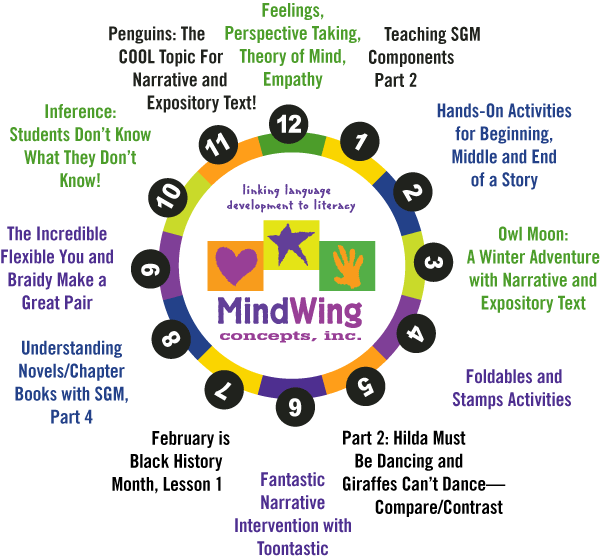 Because collaborators come from different points of view in terms of their view of the students’ needs, the contents of this listing may be something to use as a discussion tool fostering collaboration among general education teachers, special education teachers, speech/language pathologists, school adjustment counselors and those focusing on social communication growth!...


SLPs: Be Empowered to Collaborate!
 In the early 1970s, I began my work as a Speech/Language Pathologist in the Hartford, Connecticut Public Schools. The department head, Margaret Kennedy, an Iowa native, was trying to entice someone to teach a “Language Disabilities Class” at Dwight School in the South End. Language Disability was the new term in our field at that time. I had just gotten my Master’s Degree at Penn State and had an enlightening summer course in “language disabilities” under my belt. We used Helmer Myklebust’s text entitled Differential Diagnosis of Language Impairments, as our basic text and studied intervention methodologies such as the Association Method, developed at Central Institute for the Deaf in St. Louis, the ITPA, Auditory Discrimination in Depth (now known as Lindamood/Lindamood)...


The SGM® and the Developmental Reading Assessment (DRA)
 Over the weekend I noticed comments on the official SGM® Facebook page about the relationship between the SGM® and the Developmental Reading Assessment (DRA). Thanks to Sarah and Ellen for your input. — Maryellen
In general, The Story Grammar Marker®, now 25 years old, has its evidence in the research on narrative development in the disciplines of psychology, language and reading comprehension and is the foundation of discourse level oral language. Discourse is conversation, narration and information. Narrative discourse, or story-telling, begins long before the child enters school or is beginning to read. It has its roots in oral language development...


Analyze A Narrative Writing Sample
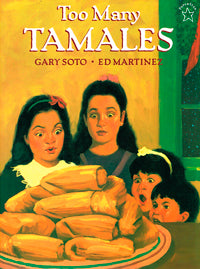 In a recent blog for Cinco de Mayo, we posted the analysis of the book, Too Many Tamales. (Previous blog.)
Too Many Tamales is quite complex in terms of its content. The reader needs to be attentive to the illustrations as well as the text itself. Complexity of a text poses challenges to students and instructors alike. There are several measures of complexity of text. They are: Lexile Measures, Qualitative Complexity and Knowledge of the competence of the student as reader/listener in order to match him/her to text and task. (Please see references below for further study.) As instructors and interventionists, we are constantly attentive to these measures...


Story Analysis: “Too Many Tamales”
 Thursday is the celebration of Cinco de Mayo, a day commemorating a military victory between Mexican and French forces in 1862, but is now a celebration of Mexican culture, food, and music. May is Better Hearing and Speech Month, which celebrates the contributions of speech/language pathologists world-wide striving to enhance the communication abilities of children and adults of all ages. In keeping with both of these celebrations, we decided to feature the picture book entitled, Too Many Tamales by Gary Soto and Illustrated by Ed Martinez, because of the festive nature of the book as well as the fact that it is a picture book written at the highest level of narrative development...


Understanding Novels / Chapter Books with SGM — Part 6
 This final section of analysis of The Big Wave by Pearl Buck begins with personification of the sea and extends the overall themes of friendship, resilience, overcoming obstacles and gratitude leading to new beginnings. The Critical Thinking Triangle® and the Complete Episode maps of the Story Grammar Marker® assist students in qualitative analysis of the plot to form opinions and apply the themes to their own lives. On pages 20 and 21 Jiya must obey and make a decision. Use two Critical Thinking Triangles to map these...


Understanding Novels / Chapter Books with SGM — Part 5
 This next section of analysis of The Big Wave by Pearl Buck begins with personification of the sea and extends the overall themes of friendship, resilience, overcoming obstacles and gratitude leading to new beginnings. The Critical Thinking Triangle® and the Complete Episode maps of the Story Grammar Marker® assist students in qualitative analysis of the plot to form opinions and apply the themes to their own lives. Pages 15-22:Through personification, the sea is described as cruel and angry. These pages contain the steps leading up to the kick-off of the first major episode in the novel. The expandable Get Ready for the Kick-Off map from Talk to Write, Write to Learn manual would be useful here showing that there is evidence that something is happening...


February is Black History Month — Lesson 1
 The month of February is Black History Month, also known as African-American History Month. It is celebrated yearly in February in the United States and Canada and coincides with the birthdays of Abraham Lincoln on February 12 and Fredrick Douglass on February 14. MindWing Concepts would like to contribute to this celebration by posting several lessons to use with the Story Grammar Marker® and ThemeMaker® which focus on the contributions and accomplishments of black Americans. These postings will include a little known, but related, story of a Springfield Massachusetts Baseball Team which chose friendship over victory eighty years ago in the American Legion Playoffs...


Understanding Novels / Chapter Books with SGM — Part 4
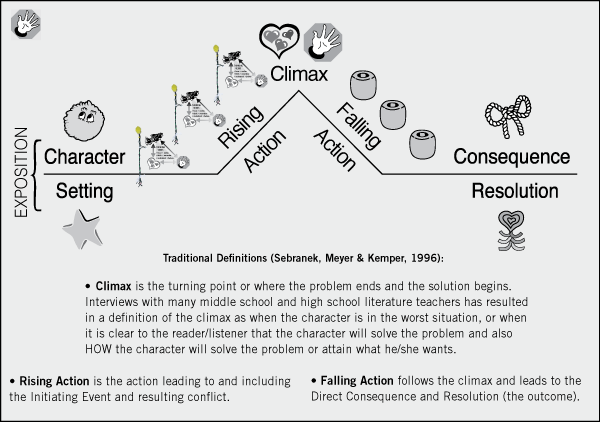 To date in this gradual analysis of The Big Wave, we have talked about the characters within a geographic setting, one where the physical happenings inherent in a setting such as Japan may involve volcanic eruptions, earthquakes and tsunamis. This setting also takes into consideration the cultures of those living in the setting. You may elaborate upon these aspects as you wish to build knowledge of the land and its people. When students approach fifth grade, a graphic known as the “Plot Diagram” or the “Plot Mountain” is shown as a way to organize the plot of a story, a chapter, or the events in a novel such as The Big Wave. Shown above is our version from The ThemeMaker Teacher’s Manual...


Understanding Novels / Chapter Books with SGM — Part 3
 Session #3: Description of a Tsunami
What is a Tsunami? A Tsunami is a huge wave that is caused by an earthquake or volcano eruption beneath the ocean/sea. There is a sequence of steps making up a Tsunami.
First, the sea bottom (Tectonic Plates) erupts. Next, the tectonic plates split or overlap, and pushing upward, cause the water above the split or overlap to rise in volume. Then, the water comes together to rise above the surface. At first the wave is not noticeable. Finally, the wave grows in height as it approaches the shallower waters of the shore...


Understanding Novels / Chapter Books with SGM — Part 2
 Session #2 — Comparative Analysis of a Geographical Setting
 Session #2 — Comparative Analysis of a Geographical Setting
This post is a continuation of our analysis of Setting of the short novel The Big Wave by Pearl S. Buck. In Session #1, we learned about Japan the country. We will now compare the Settings of the two main Characters. There are two primary geographical settings in this book. Both are in Japan.
- Kino lives on a mountain farm near a volcano.
- Jiya lives in a fishing village at the edge of the sea.
Oral Language: A “Hot Topic” In Literacy Education
Today I am finishing up details for an ongoing consultation that I have with a school system here in Massachusetts pertaining to Language Learning Disabilities.  I am, as you know, an ASHA certified Speech/Language Pathologist. Most of my professional life—over forty years—has been spent researching and working with children who have reading disabilities (from the code to comprehension) and how the children and their reading are impacted by oral language deficits/differences. Consequently, in addition to ASHA, I belong to several other associations and look forward to the arrival of their journal publications. One of these associations is the International Literacy Association, formerly known as the International Reading Association. The IRA publishes The Reading Teacher and The Journal of Adult and Adolescent Literacy.
As an SLP with a great interest in reading and writing, I enjoy the points of view of authors within these publications and use the articles to provide discussion among the educators with whom I work.
This issue of the IRA’s publication Literacy Today (Volume 33, Issue 2...
April is Autism Awareness Month
We are proud to finally (officially) introduce our NEW Autism Collection with two spiral-bound manuals (It’s All About the Story and Making Connections), games, activities, cards, stamps and more! Click here to see a picture of the Autism Collection and to learn more about this brand new product. The Autism Collection is available at a discounted, introductory price of $74.95 during the month of April.
Story-Based Intervention for Children with Autism Spectrum Disorders
Since April is Autism Awareness Month, we thought that the contents of this blog entry should be about MindWing’s tools and methodology as a Story-based Intervention for children with autism spectrum disorders. In September, 2009, the National Autism Center announced the results of its multi-year National Standards Project1. This project “serves to support parents and professionals and answers one of the most pressing questions…
Narrative Practice Hypothesis
The following description (bolded) was a component of a presentation by Carol Westby, Ph.D., at the American Speech/Language and Hearing Association Convention ASHA 2008, Chicago. Italics are our notations.
Narrative Competency plays a large role in the understanding of why people do what they do.
Stories are natural extensions of children’s earlier experiences of sharing of event structures...
Narrative Competency plays a large role in the understanding of why people do what they do.
Stories are natural extensions of children’s earlier experiences of sharing of event structures...
“Make It Better” through Storytelling
 It’s really exciting when a speech-language material is published that provides clinicians with a ready-to-go resource that jibes well with strategies we already have been teaching. Such is definitely the case with the excellent We Can Make it Better program recently released by Think Social Publishing and written by Speech-Language Pathologist Elizabeth Delsandro. We Can Make it Better is a set of 20+ stories in which social interactions go quite wrong due to “unexpected behaviors” by one of the characters. The materials and activities unfold in a very logical therapeutic structure that challenges students to “make it better” by deciding alternative actions for the characters...
Register for Both Summer Workshops in New England & Take a Vacation!
 Are you looking for a fun summer get-away with a purpose? How about a trip to scenic New England?
A few out of state colleagues asked, “What could my family do if they came with me and I attended both of your workshops this summer?” So, we put together a sample itinerary we thought we’d share:
- You could fly into Bradley International Airport in Hartford, CT on the weekend of July 16/17. (Make sure to rent a car that has GPS so that you will have no problems finding your way around New England!)
- Over the weekend into Monday, you could drive to New York City, it is about 90 minutes from there. Here is a link (http://www.iloveny.com/) to help you navigate the many attractions including: Rockefeller Center, Ground Zero, Time Square, Empire State Building, Statue of Liberty, and maybe even catch a Broadway Musical!...
The “Core” of the Common Core State Standards
The goal is for ALL students (including those with identified disabilities, those who are English Learners, those who are “at risk” and those children with Autism) to receive the most effective interventions to help them to develop the communicative competence necessary to meet grade level standards, achieve academic & social success and be prepared for college and/or career. Through collaboration among SLPs, teachers and specialists all using Story Grammar Marker®, Six-Second-Stories® and ThemeMaker® methodologies to provide intervention in oral language development; this goal can be attained...


Ronald Morgan Goes to Bat
By Patricia Reilly Giff — Read the story to the children. Review the Character Map. Discuss using illustrations and text to help fill in the maps. We have found it helpful to have a list of personality traits which have been generated by the children posted in the classroom. As the year progresses, add to the list. You may also like to add the title of the story and name of the character that the trait reflects… this makes it a nice way to reference back to previous stories that the students are already familiar. It is important to discuss WHY you choose certain personality traits to describe characters.
Welcome to MindWing's New Blog!
As you visit our blog, please feel free to “SHARE” this information with your friends and colleagues by clicking on the links below. Within this blog we hope to infuse your knowledge and use of MindWing’s methodology with new lesson ideas, new research findings and new products! Maryellen Rooney Moreau, M.Ed. CCC-SLP will be blogging about her current thoughts and research about oral language, comprehension, writing, critical thinking, narrative & expository text. Sean J. Sweeney, M.S, M.Ed, CCC-SLP (a longtime friend & colleague, but new to MindWing’s team) will be blogging about technology integration with MindWing’s methodology. Sean, an SLP, also has a degree in Instructional Technology and has hundreds of fantastic technology-based ideas using Story Grammar Marker®, Braidy the StoryBraid®, Talk to Write, Write to Learn™ and ThemeMaker™. We are looking forward to his exciting lessons! I (Sheila Moreau) will be blogging about new products, new product uses, success stories, and Professional Development information & locations and tidbits about our travels throughout the country as we bring MindWing’s message to more and more educators and parents. Enjoy!
And to think that YOU saw it on Mulberry Street
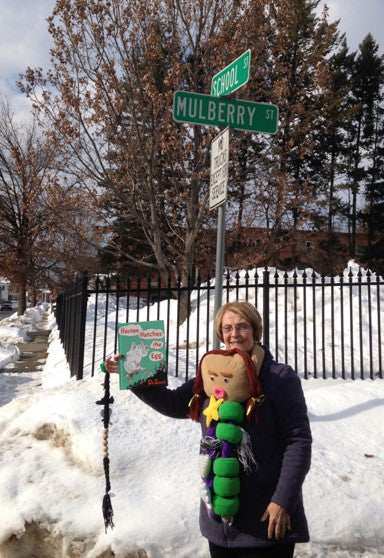 Maryellen Rooney Moreau with Braidy the StoryBraid® and Story Grammar Marker®, holding a copy of Dr. Seuss’ Horton Hatches the Egg! (right) Mulberry Street is a 10-minute walk from our office and it is this Mulberry Street in Springfield that inspired Dr. Seuss’ first published book And To Think That I Saw It On Mulberry Street. Today, Maryellen took a drive over (it is way too cold and snowy to walk) with Braidy® and SGM® for a Dr. Seuss photo opportunity in honor of Dr. Seuss Day. Dr. Seuss would have been 111 on March 2nd and he grew up right here in Springfield, MA...


Halloween Surprise!

October 31 is Halloween. According to history.com, “every October, carved pumpkins peer out from porches and doorsteps in the United States and other parts of the world. Gourd-like orange fruits inscribed with ghoulish faces and illuminated by candles are a sure sign of the Halloween season. The practice of decorating “jack-o’-lanterns”—the name comes from an Irish folktale about a man named Stingy Jack—originated in Ireland, where large turnips and potatoes served as an early canvas. Irish immigrants brought the tradition to America, home of the pumpkin, and it became an integral part of Halloween festivities.”...


Evaluating the Effectiveness of a Narrative Language Program in Classrooms
 People often ask us how to get Story Grammar Marker® implemented in their school/school district. The following article, re-printed here with permission, describes step by step how, with a supportive administration and engaged teachers and specialists, two Speech Language Pathologists did it! They even reveal the results of pre- and post-tests of narrative scores for retells. Thank you so much to Miranda and Melissa for having us out to train in Kelowna, British Columbia and for sharing your success story with us! — In the summer of 2016, Melissa Perehudoff and I brought in Maryellen Rooney Moreau (creator of the Story Grammar Marker®) to provide a two-day workshop for Student Support Services-School District #23. We were using the Story Grammar Marker® with many students for language therapy so we were really excited to see her in person...


Listen. Words Have Power
 We stand in support of racial equality. To be anti-racist, people must be able to listen, use their voices, take perspective, tell their stories, and express their thoughts at home, in school and in life. We are committed to continuing to focus our professional development on supporting children in “telling their story” as well as sharing narrative and expository selections of children’s literature that are written by Black authors and People of Color, that have characters representing multiple cultures, as well as those books that take on themes and topics such as racism, racial justice, and diversity. This is Maryellen Rooney Moreau’s 50th year as a speech/language pathologist specializing in communication and discourse. Her passion is helping children to think...


Wind-Back Wednesday! Old School Story Grammar Marker® Mementos from the Early ’90s!
 Today we are winding back the clock to the early 1990s. While cleaning out her basement, Maryellen Rooney Moreau, creator of Story Grammar Marker®, found some really cool SGM® “mementos” from the early days of SGM® when she started this business in her basement. To the right is Maryellen (today) standing next to the first-ever banner that was made for trade shows and conferences that Maryellen attended when she first published Story Grammar Marker®. It is complete with vinyl lettering and fancy, colorful decals. To Maryellen’s far left is the life-size custom cut-out of Story Grammar Marker® from last year’s American Speech Language Hearing Association Convention. WOW! There is quite a difference...


Owl Moon: A Winter Adventure with Narrative and Expository Text
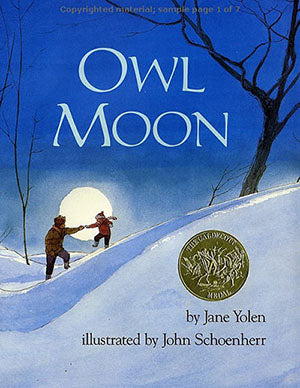 Snowy evenings often inspire poets, musicians and writers. One that I love is Robert Frost’s famous poem entitled Stopping by Woods on a Snowy Evening. I have a beautiful copy of this poem with illustrations by Susan Jeffers. This poem happens to be an exemplar poem listed in Appendix 2 of the Common Core State Standards. The last page of the book has a note written by the illustrator about her mother, an artist, who would take her daughter for walks on snowy evenings: “My mother’s favorite thing to do was simply to walk outside and look. She was a painter and my first painting lessons came from her. They were really lessons in looking. She would ask me: What is the color of the tree shadow? Is it blue? Blue- green” Violet? She was teaching me to paint what I saw, not what I knew. What I knew would never be enough.” Color often is a clue to the author’s, poet’s or illustrator’s theme. Robert Frost’s poem, so beautifully illustrated in this version, reminded me of Owl Moon by Jane Yolen and illustrated by John Schoenherr, due to similarities of the winter night’ setting, the owls and the mention of colors...


Announcing the Story Grammar Marker (SGM®) iPad App!
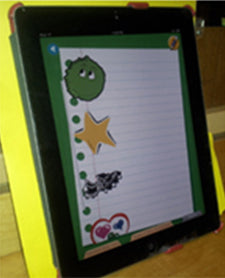 At MindWing Concepts, we are very excited to be celebrating the release of the official Story Grammar Marker app! Our goal in developing this app was to create a digital version of the SGM manipulative in order to take advantage of the iPad’s multifunction capabilities: students can touch the icons, add text, draw or import pictures, and record oral language in the process of story mapping. The app will complement MindWing’s tools for existing users of our methodology and also welcomes those who are just discovering our visual, tactile and kinesthetic approach to narrative language!...
FREE WEBINAR IS AVAILABLE TO VIEW AT YOUR LEISURE
Our first editorial webinar, “Narrative Development: Beyond Story Grammar,” with Advance was a success. There were 877 SLPs registered!! We are thrilled to be able to share Maryellen’s expertise with so many colleagues. We have gotten many requests for Maryellen to present throughout the country. If you are interested in Professional Development information, please click here and fill out the form...
Free Webinar! Narrative Development Beyond Story Grammar September 13, 2011
Abstract: When we think about "narratives," we often only think about naming the parts of the story, sequencing actions and whether that story has a beginning, middle and end. Narrative development goes beyond the basic story. Instruction and intervention in narrative development can improve your students' skills in oral and written communication. Narrative development can help students with perspective-taking, problem solving, answering "why" questions, and comprehending and communicating the emotions, motivations and plans of characters in stories and in life's social interactions...
Settings and the Five Senses
The book that my friends and I are reading in July for our Book Club is the best seller Valley of the Dolls by Jacqueline Susann. I am only a couple of chapters in, but the first few sentences in this book struck me, because this passage exemplifies the idea of authors’ ability to create “movies” in their readers’ minds.
"The temperature hit ninety degrees the day she arrived. New York was steaming — an angry concrete animal caught unawares in an unseasonable hot spell. But she didn't mind the heat or the littered midway called Times Square. She thought New York was the most exciting city in the world" (Susann, 1966). The author used many senses to describe the setting; how the heat felt, what she saw and heard and smelled. Susann also used figurative language and personification (“angry concrete animal”) to create a very vivid mental image of New York City...


Tech Tuesday: Summer Study Series and “What Does It Mean to Be Social?”
 For our last 😢entry in our “Summer Study Series” for 2020, we look at a perspective on social cognition with a twist: how are children with significant speech sound disorders, such as apraxia of speech, impacted within the sequence of developing social competencies? This article, What Does It Mean to Be Social? Defining the Social Landscape for Children With Childhood Apraxia of Speech, is provided by Nancy Tarshis, Michelle Garcia Winner, and Pamela Crooke (2020) and was released within ASHA’s Perspectives (Special Interest Group 2) journal available to anyone with a SIG membership in any specialty. For others, the article is behind a paywall, so I hope this review at least will be helpful...


Spiders! 5 Books, Resources and Activities
 As so often happens when I see a certain book or project, it reminds me of particular lessons that I taught while teaching at the former Juniper Park School in Westfield, MA. A recent display of books on spiders at our local library did just that. Below are some ideas on spider-related books that you may want to try this summer or tuck them away in your files for future use. In addition to other resources, several of the selections below are Anansi trickster tales which were first told by the Ashanti people in Ghana. We begin our lesson suggestions with one of the Anansi stories adapted and retold by Eric A. Kimmel and illustrated by Janet Stevens. These were always popular with second and third graders. I liked to use them to reinforce the SGM® complete and interactive episodes and character traits...