
Search
175 results found for "Sean Sweeney"


Tool Tuesday: The Picture Books of Mac Barnett!
Barnett’s stories are playful, visual, and funny. Whether it’s the humor in Oh, No! and Oh, No (Not Again), or the adventure and irony of Sam and Dave Dig a Hole, these books present many narrative and expository opportunities with Story Grammar Marker®, Thememaker®’s expository maps, and, of course, visual tools such as magnets and digital icons. What sets many of these books apart is the way they use visual cues, nonverbal behavior, and subtle character plans—a perfect match for SGM® icons that help students recognize story structure and the “landscape of consciousness” (characters’ plans, mental states, and feelings)...

Tool Tuesday: Summer Study Series, Part 3—Expository Intervention Research!
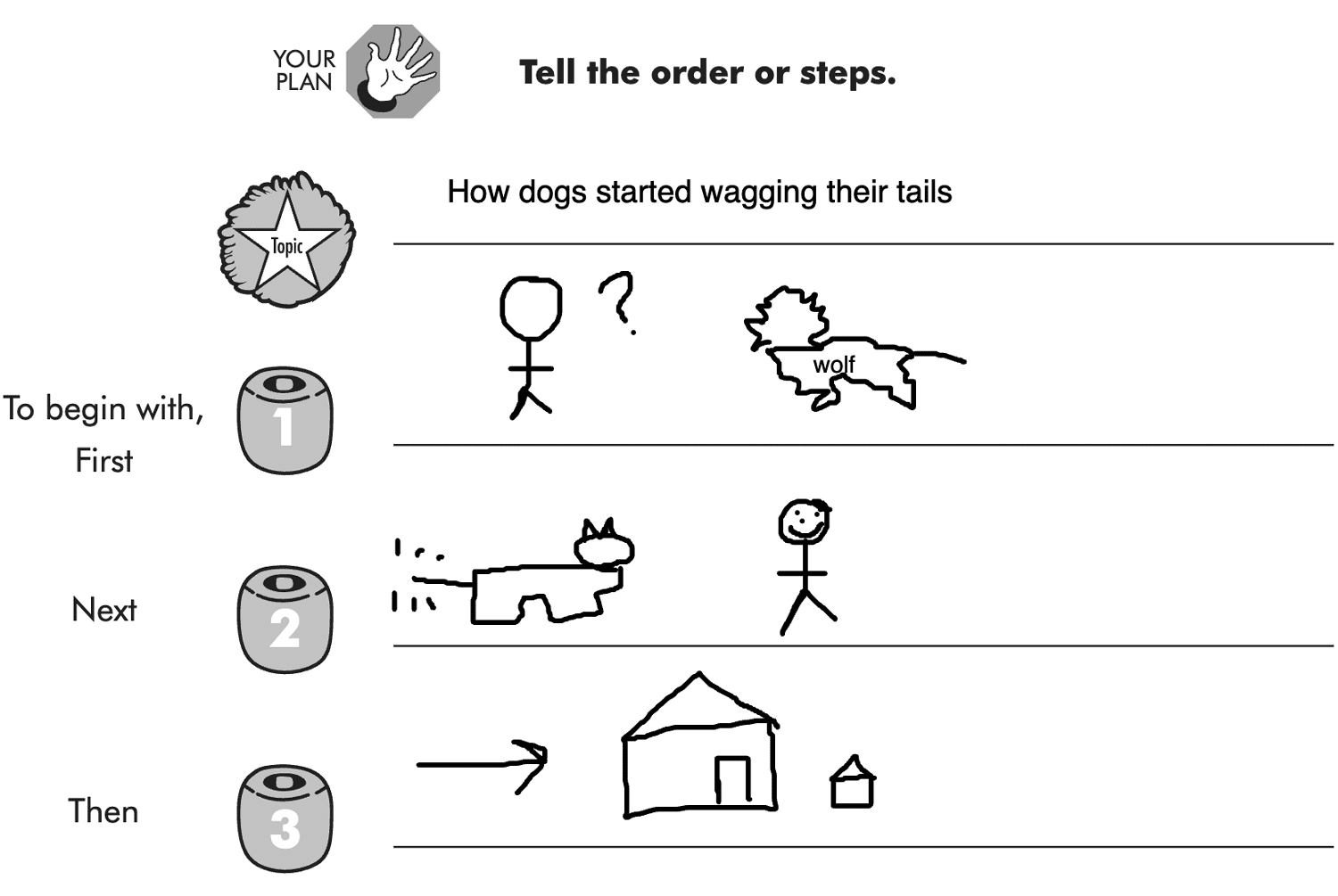
Sketch and Speak works like it sounds, scaffolding students’ use of pictography, or quick sketches, to visualize details of an expository passage, followed by their oral description. This process has terrific synergy with MindWing’s methodology and materials, particularly ThemeMaker, as structural comprehension approaches (i.e. ,analyzing List, Sequence, Description, Compare-Contrast, and other structures) go hand-in-hand with developing understanding of the expository content. In fact, MindWing’s Expository Maps go so well with this strategy, they can literally be used as the space for it.

Tool Tuesday: Summer Study Series, Part 1—Getting Gamey!
Happy Summer! Each year we set aside these few months on the blog to explore some recent research articles and literature that have relevance to MIndWing’s tools and narrative and expository language supports. This month we check out the first of a two-part article discussing game-based learning (GBL), a popular approach for engagement in classrooms, which can be found at Getting Serious About Games: Exploring How Game-Based Learning Is Used in Education and Therapy. The piece has many points that relate to how games can be used as a language and learning context...


Tool Tuesday: “What is this Feeling?”
Wicked has become an almost-too-inescapable cultural juggernaut thanks to tie-ins with everything from Xfinity to the OPI nail polish (Ozitively Elphaba) that my ugly toenails will soon be sporting. However, I’ve been a huge fan of the musical since its arrival in 2003 and have been happy to capitalize on my knowledge of it with some of my students. In any case, students’ interests, including current movies, can provide great context for story analysis (macro), as well as many micro targets from vocabulary to social cognition...


Tech Tuesday: Follow your Students’ Tunes!
 In this Autism Acceptance Month, it’s more important than ever to hear the voices coming out of the neurodiversity movement and those of our students themselves. With many autistic individuals growing up and sharing via social media and other channels what has and hasn’t worked in their education, we have some affirming shifts that we can make, for sure. One angle that I always try to take is incorporating my students’ interests in sessions. This helps our activities to be engaging and context-driven, but also incorporates client values, a pillar of evidence-based practice. A teenage client of mine has shown a burgeoning interest in rock music and The Beatles in particular. It occurred to me immediately that many Beatles’ songs tell a story, so that was a great place to start. One of the key things I love about technology is that it can make context immediately available...


Tech Tuesday: “Storyboard That!”
 Among the tech resources that can be helpful in narrative intervention are those that let you make your own story. Content creation apps and websites, often called “digital storytelling” tools (search Pinterest for many examples in this genre), provide great contexts for speech, language and literacy skill development for their ability to visualize story elements in cartoons or images. Digital storytelling tools can be employed in parallel with Story Grammar Marker® manipulatives, icons, and maps in a variety of ways: You make it: Create a product that you can “unpack” the story elements of with students, with SGM® playing a key scaffolding role, of course. We make it: Co-create with students by allowing them to make choices to construct a story, with you handling parts or all of the actual tapping or clicking to move things along. They make it: Often facilitated with you providing a model...


Tech Tuesday: The Very COVID-Relevant SGM®
 As a (mostly entirely) telepracticing Speech-Language Pathologist during these weird times, I have found fostering narrative language in my students to be an even more critical intervention area than before. From providing opportunities to help students escape into stories, to helping them share their thoughts and feelings on school and home, current events and relationships, the Story Grammar Marker® has been an essential tool in therapy. In this post, I will describe some tech-based applications of SGM® for you to consider during the pandemic. Even with, and perhaps, because of the prevalence of remote learning, students are feeling isolated and likely having fewer opportunities to tell their stories and gain connections with others. In group therapy, we spend time letting conversation “breathe” and scaffolding connections. One way I have worked on this is to blend the new Conversation Paths product by Dr. Anna Vagin, CCC-SLP with Story Grammar Marker® Icons to tackle multiple narrative and social-cognitive goals. Conversation Paths is a pack of editable conversation-scaffolding visuals (PowerPoint) targeting the building blocks of conversation: “4 Starters” (initiation strategies), comments, questions, and others.


Tech Tuesday: Placing Expository Structures/Icons in Context
 MindWing’s icons for narrative and expository language can make conversation about any TOPIC a strategic and scaffolded one. Last month I recorded a free webinar with Maryellen (Technology Tools to Engage Children in Science & Social Studies During Distance Learning Sessions) on expository text structures (ThemeMaker®) and using MindWing’s icons in context with technology resources. In this post, I’ll be giving some examples of expository-embedded resources online that can be used in teletherapy sessions. By expository-embedded, I mean resources that don’t necessarily say one, another, also, or first, then next, but can be used to form conversations and reviews with structures like List and Sequence. Take for example, Google Earth. This now-web-based interactive globe allows you to simply search and navigate in order to provide tours, and what is a tour but a LIST (or SEQUENCE) of places within a main idea or overall location...


Tech Tuesday: Basics of Using MindWing’s Digital Icons

MindWing has made its digital icons available at low cost to assist us as we are providing distance learning and teletherapy during this COVID-19 crisis (surely one of the biggest common kick-offs we have experienced). In this post, I’ll be outlining some what-tos and how-tos with the icons; if you’d like a longer visual overview, I recorded a webinar (Intersecting Story Grammar Marker® with Technology and Telepractice: Distance Learning During this COVID-19 Crisis and Beyond) with Maryellen on April 1, 2020 and the recording is available for free on the site. The Digital Icons downloadable is a PowerPoint (PPT) file that can also be opened in Apple (Mac)’s free Keynote application or uploaded to Google Drive and opened with Google Slides. PPT files open automatically in Keynote, but let’s tackle that Google part first...


Tech Tuesday: ASHA Convention Wrap-up, Part 2
 In last month’s post (ASHA Wrap-Up, Part 1), I outlined one session from Orlando’s 2019 ASHA Convention that I was involved in, and promised a part 2! For this post, I am going to focus on resources I presented in an additional installment of “Pairing Picture Books and Apps for Contextualized Language Intervention,” a session I have been privileged to present over the last several years, with varying themes. In this session, given the proximity to Epcot, I thought it would be fun to highlight the ways that picture books and apps can be used to “Show Them the World (Knowledge),” meaning work in context to develop both Social Studies and general world or semantic knowledge. In all of my sessions on this topic, I have always emphasized the potential for both books and apps to provide context to develop both story grammar and expository text structure, modeling of course, with Story Grammar Marker® and ThemeMaker® tools and visual graphic organizers. Both macrostructure and microstructure can be emphasized when reviewing the story or information presented in a book or app, along with other skills...


Tech Tuesday: Google’s Geo-Tools Show More than Setting!
 Following up on last month’s Tech Tuesday post describing some narrative and expository teaching tools within Google’s G-Suite, this month we’ll look at some Google resources to visualize setting (and more)! Google Earth has long been a great tool for language development, as it is a searchable, interactive globe allowing you to zoom into an aerial (3D) image of any location, as well as offering Street View interactive imagery and text descriptions. Google Earth previously existed as a complicated downloadable application but now is available as a web version in the Chrome browser, as well as a simplified free iPad app...


Tech Tuesday: La La Land, Part 2
 I previewed last month that this month’s post would discuss some of those exemplar pairings specifically. Before we crack some books and launch some apps, a word about analyzing contexts. For both books and apps, it can help if they have what I like to call a “Speechie” quality. You can read more about this along with the FIVES criteria (Fairly Priced, Interactive, Visual, Educationally Relevant, Speechie). Breaking down the Speechie part, we can ask ourselves if the book or app is a context for speech and language development: • Does it have a narrative structure that can be used for intervention, considering Story Grammar Marker® or Braidy the StoryBraid® as a tool (this includes apps that allow you to make your own choices such that a story unfolds)? • Does it provide or allow you to interact with informational language...
Tech Tuesday: Language Mapping Activity with “SnapType”
 In a previous post, I described a number of ways to complete language mapping activities digitally, taking paper out of the equation. Working with digital materials supports students who have difficulty writing and organizing their papers, and also makes strategic methodologies such as MindWing’s more shareable for consultation purposes. In that post I outlined how you can: • Annotate Maps on a Mac/PC • Annotate on iPad • Annotate in Google Drive • Create digital story maps in the SGM® app. Recently we became aware of another resource, SnapType (Free to try, $4.99 for the full version), which was developed out of interventions in occupational therapy. SnapType was designed to be simple enough for a student to use independently, and has an interesting story behind it...


Tech Tuesday: Stories of Turkey Day
 Technology, as always, can help us bring contexts to the table, including the upcoming Thanksgiving holiday. Here is an updated list of tech-based visuals and interactives that can be used to elicit narrative and expository language using Story Grammar Marker®, ThemeMaker, MindWing’s narrative and expository maps, magnets, and the SGM® iPad App (still on sale through November for $14.99 in celebration of ASHA Convention). Epic! Books for Kids: This terrific resource offering free educator accounts and a huge variety of e-books (readable on iPad, web or Apple TV), offers some great contexts when you search for “Thanksgiving.” Among these are P is for Pilgrim: A Thanksgiving Alphabet (Crane/Urban), an alphabet book for all ages. Consider using this book to explore two different settings: past and present...


Tech Tuesday: Using the Pic Collage App with Complete Episode Narratives


Opening a New Chapter: Strategies for getting the context of curriculum chapter books!
 As the MindWing blog has been focusing on using chapter books for older students, in conjunction with narrative and expository development tools, this Tech Tuesday post will also! In this post, we’ll take a look at technology resources that facilitate your access to chapter books. These strategies will enable you to use chapter books more easily as contexts when developing students’ sense of story and informational text structures with MindWing’s Story Grammar Marker® and Expository maps. Naturally, we’d be conducting educationally relevant interventions even if we selected our own texts for lessons. For example, take this Common Core Standard for 5th Grade Reading...
Character Social Thinking
While running groups for students with social-cognitive deficits over the past years, I have frequently observed their difficulties with the story grammar element of character. Often, these students start telling a story in the vein of “Mike and I went to…” as the rest of the group looks at them blankly, thinking, “Who is Mike??” Or at least the facilitators are wondering who Mike is, since the other students may not even be thinking of the “expected behavior” that they should listen, let alone tease out character details!
Let the Setting Speak for Itself
Blabberize, a web app that allows you to add a talking “mouth” and recording for any picture, is a great tool for developing all kinds of organization and oral language skills. I recently used it with students in conjunction with a Setting Map from It’s All About the Story to develop descriptive skills and the concept of setting. After having students pick a favorite setting, we located a visually supportive image of the place using Google Images. Students completed a Setting Map and described key elements such as Location, Function/Use, Areas/Parts, etc. We then downloaded the image, logged in to Blabberize, added a mouth and integrated the notes on the Setting Map into an oral description. The example you can view here is one created with an individual student; you can always keep it shorter if you have a group!...


Interactive, Visual Resources to Complement Feelings Instruction (Internal Responses)
 As stated so well in It’s All About The Story, Book I of MindWing’s Autism Collection, “Tuning into one’s own Feelings as well as the Feelings of Others is extremely problematic to children with autism. The book provides visual flip charts, discussion prompts and an introduction to the Six Universal Feelings (happy, sad, mad, scared, surprised and disgusted), as well as ways to move beyond those Universal categories to more advanced feelings vocabulary—all of these resources give SLPs a great place to start...
Fantastic Narrative Intervention with Toontastic
 Recently in the Mindwing Blog I featured the Story Patch iPad app, which allows students to create stories according to provided structures or from scratch, resulting in a text and picture-based booklet.
I wanted to follow up that post with a different digital storytelling app that provides an easy means to create and publish dynamic animated stories with spoken audio and music! The app I speak of is Toontastic (an absolute BARGAIN at $1.99), whose creators at Launchpad toys have sought to bridge the gap created when students who primarily express themselves through play are suddenly expected to write stories (i.e. that gap we call “First Grade”). Toontastic uses the iPad’s multitouch interface...

Tool Tuesday: Thought Balloons!
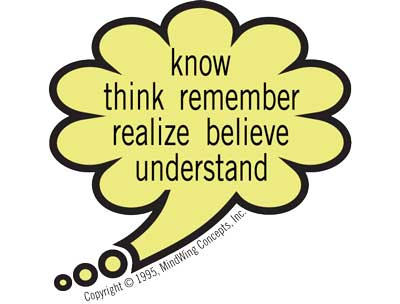
 A thought balloon is a very valuable tool. It provides a visual scaffold that opens doors to that “landscape of consciousness” that is characteristic of the later stages of the narrative developmental sequence (stages 4-7). As such, it’s the gateway to perspective-taking! I’ve become enamored with Story Grammar Marker’s thought balloon icon, accessed among other ways through MindWing’s Digital Icons Set and The Critical Thinking Triangle in Action. Working with neurodiverse clients, this icon provides a key cue toward using mental state verbs and adeptness with reading others’ thoughts and intents...


Tool Tuesday: Transcribe with AI
This past ASHA Convention in Seattle, my friends and colleagues Meghan Graham and Caroline Brinkert from Boston University discussed the importance of language sampling in supporting student growth, specifically in preschool. They also described barriers to language sample analysis, including time investment and clinicians’ uncertainty and lack of confidence in their skills for this kind of assessment. Truly, the time factor was always a big deal. Recording, playing, and rewinding cassette tape recordings, as we typed out a sample, gave way to doing the same with digital recordings on our phones and iPads, saving little time. AI transcription utilizes Automatic Speech Recognition (ASR) technology, which is based on language and learning models that interpret human speech and convert a recording into text.


Tool Tuesday: Create a Halloween (or Other) Story Song
Artificial Intelligence (AI) tools are becoming more prevalent, powerful, and integrated in our daily lives. While this is on some level SPOOKY, given the tasks they can perform as well as the potential for abuse, they offer amazing opportunities to create with our students if used carefully. The creative power stems from the relatively recent dawn of “Generative” AI, which can compose materials in the form of text, images (previously discussed here and here) or even music, the topic of today’s post...


Tool Tuesday: Summer Study Series Part 3—Considering Narrative and Neurodiversity
With this 3rd entry in 2024’s Summer Study Series, we look at a recent article that promotes neurodiversity-affirming approaches and how narrative language intervention fits within this recent topic. To offer a simplification, the neurodiversity movement has emerged in recent years as autistic individuals aged toward adulthood. Social media in particular has given autistic culture an amplified voice, and this population has expressed opinions about their educational experiences and what has been helpful, and in some cases, harmful to them...


Tool Tuesday: Summer Study Series Part 1— “Translating MindWing’s Approaches to Older Students”
I have often reflected that MindWing’s approaches have equipped me with invaluable tools when working with younger populations, but also older clients. While still focused on pediatrics, I often have an adult or two on my caseload who presents with language comprehension or expression difficulties...


Tech Tuesday: AI writes stories!
 Artificial Intelligence (AI) has entered a new phase with the recent arrival of generative AI, which can be used to create content rather than just sort existing data. This has resulted in the release of tools such as ChatGPT, which is simple to use and query for all kinds of language content. Just log in with your Google account and you are good to go! Of course, with ChatGPT able to generate any kind of information and write in a wide variety of styles, there are concerns about its use as a workaround for schoolwork. Teachers do have tools to detect AI writing, and a specific SLP’s take is that this kind of AI clears the way for us to work on higher level skills. For now, it’s a good tool to explore. Consider the ways that ChatGPT specifically could be used to generate stories using specific Characters, Settings or Kick-Offs in order to emphasize story elements with Story Grammar Marker®. It also can be used to create text that corresponds to various expository text structures such as List, Sequence, and Description and thereby be used with ThemeMaker®’s Information structures and Maps...


Tech Tuesday: Story-Form Directions and Play!
 Being told what to do is often no fun. But for many of us targeting language development objectives, we have to deal with our students’ potentially low scores on assessments such as the CELF-5s Following Directions subtest. Key to success on activities such as these are student’s listening skills and understanding of concepts related to time, space, number, and sequence, among others. The good news is that these concepts are everywhere and can be targeted through stories and play! One way I have been approaching this is through the Toca Life: World app, previously discussed here. The app is available for multiple platforms as you can see, and you can either purchase individual “Settings” (e.g. Toca Life: Vacation, which I like to refer to with colleagues as The White Lotus), or connect purchased apps through the World app. The World app also has mini-settings you can purchase for short money, for example, a ski resort. I have been using the book Where’s Walrus? by Stephen Savage with students recently (video here) (recall: using picture books on YouTube can work wonderfully with heavy use of the pause button)...


Tech Tuesday: Internalizing Icons!
 Story Grammar Marker® provides visual support for understanding and forming narrative, but part of its work depends on students ascribing meaning to its icons. Helping students internalize these visuals, their connections and meanings can take some review, and the more fun, the better! Here are a few tech-infused ways to drill-play the SGM® icons! Use a Slideshow! Google Slides can be a great way to make a digital “manipulative” for review. Pick a personal narrative or reviewed story to talk through, then use the Slideshow mode as a “quiz” on the icons alone or linked to contextualized story elements (e.g. “Kick-Off- the Bear’s kick-off was that someone stole his hat!”)...


Tech Tuesday: Summer Study Series #1, Morality as Language?


Tech Tuesday: Gratitude is a Story
 The practice of gratitude is one that research suggests can be helpful psychologically all year round, so my hope is that this post will be useful to you in many days beyond Thanksgiving. However, when you think about it, gratitude is based in narrative, as a thought/emotion we have in response to life events. Culatta and Westby (2016), in a tutorial entitled “Telling Tales,” suggest that intervention to improve narrative language including emotional and theory of mind content should “focus on emotion and character traits that cross events.” For this and other reasons, particularly “in these difficult times,” we would do well to cultivate expressions of gratitude in interventions across the year and in varied contexts. Here are some resources to help you promote gratitude along with narrative and expository language...


Tech Tuesday: Return of the Summer Study Series!
 For the past several years in this space we have presented a “Summer Study Series” highlighting peer-reviewed articles and research relevant to narrative and expository assessment and intervention. For 2020, we begin with A Systematic Review of Academic Discourse Interventions for School-Aged Children With Language-Related Learning Disabilities (Peterson, Fox & Israelsen, 2020). Systematic reviews are a higher tier of research applying selection criteria and metrics to determine effect sizes of studies of particular types of interventions. In other words, a study of studies specific to narrative and expository (more the latter) discourse...


Tech Tuesday: ASHA Beantown Wrap-Up, Part 1
 This past week featured the American Speech-Language Hearing Association’s annual national convention in our home state (and my home city of Boston)! MindWing presented and exhibited at the convention and I was proud to be part of two presentations that incorporated MindWing’s tools with context-setting resources including both technology and picture books. I was thrilled to present another edition of an oral seminar describing the helpful pairing of picture books and apps for contextualized language intervention. As this year’s ASHA theme focused on evolution and innovation within the field of speech-language pathology, this presentation centered around pairings that aligned with social studies and science topics (Boston also is a “Hub” of both disciplines). Some of the background within this presentation centered on why SLPs and literacy interventionists might seek to incorporate social studies and science topics in our work...


Tech Tuesday: 4 (and More) Ways To Tell the Story Digitally



Last month I visited the MindWing Concepts offices to lead a small group workshop on integrating tech tools with Story Grammar Marker® and Thememaker®. One of the biggest topics of interest involved ways to use MindWing’s story and expository maps on laptops, iPads and even within Google Apps, and we spent a chunk of time exploring these possibilities. We thought that this topic could use an update on the blog, so here we go! First of all, some rationale. Why might you want to work with these tools digitally (meaning the files—PDFs—provided with your purchase of any MindWing manual, either via CD-ROM in previous years, or more recently, via a free download code within the manual)? A few reasons:...


Tech Tuesday: Snow Stories
 Just about any topic can be a context to develop narrative and expository language with Story Grammar Marker®, Braidy the StoryBraid®, and Thememaker®’s narrative and informational language icons and maps.
Right about now, snow is big on everyone’s mind in the Northeast, having just endured a blizzard and with another snowy week on the way. So, though I don’t love it, snow can provide a good example of working within a theme and identifying and pairing activities to build narrative and other language skills while immersing students in a context...


Tech Tuesday: Toca Life: Farm and other Sandbox apps provide fertile ground for storytelling!
 Sandbox apps, like the real-life playspace they are named after, allow you to play pretty much however you want within their boundaries. Sandboxes themselves are constrained by the walls of the box, the toys you have and the amount of sand; sandbox apps tend to be bound by a context. Toca Boca has created a series of sandbox apps containing different real-world contexts, the latest being Toca Life: Farm ($2.99 for iPad and other platforms). Toca Life: Farm allows you to play and tell stories within a farm scene, farmhouse, barn and farm store, and the possibilities for Kick-Offs, Plans and Actions are limited only by your imagination...


Tech Tuesday: Spooky Stories!
 Halloween and the days around it open up a world of strange and fun stories! Check out these apps to provide a doorway (a creaky one) to developing narrative language. Toontastic (free for iPad) is a fantastic app for all seasons and contexts, but be sure to beware of its Halloween theme! Toontastic is a screen-recording application in which you can select a Setting (or use one of your photos as a background), choose “toys” that include Characters and props, and then create a story. The app scaffolds a “plot mountain” with setup, conflict, etc., but you can use it to create simpler projects. Toontastic includes Settings such as Dracula’s castle, Dr. Crankenstein’s Lab, a spooky graveyard and house, a dark bog, and corresponding Characters to build a story. Once you select a Setting and Characters, tap Start, and the app will record both your movement of the Characters and any language spoken...


Tech Tuesday: Build a Story with LEGO, Part 2
 In last month’s Tech Tuesday post, we discussed the potential of LEGO® products in interventions for social cognition and language development. The post focused on the uses of real, hands-on LEGOs for building stories, specifically, using baseplates to collaboratively build a Setting with minifigure characters, with blocks setting the stage for discussion of Actions, Kick-Offs, and Reactions. At the same time, multifunction LEGO blocks provide students with opportunities to apply the Social Thinking® concepts of “sharing imagination” and “adding thoughts” as they build together. In this post, let’s look at some (mostly) tech-based opportunities to capitalize on students’ interest in LEGO....


Tech Tuesday: Build a Story with LEGO

For many years, I had viewed my students’ interest in LEGO® products as having some potential for instruction in social skills and language development. I mean, anything that spurs that much engagement from children can be leveraged for learning, right? However, I struggled around how to structure the use of actual LEGO blocks to create a situation where students were practicing language and social interaction together rather than just doing their own thing. The solution came with a realization that LEGO can be used to have students build and interact around one scene or story, and the essential piece, literally and figuratively, is as simple as a baseplate...


When the characters are a whole classroom of students: Some high and low-tech tips!
 For this first Technology Tuesday of 2016, we’ll be sharing some strategies for delivering whole-class instruction, some involving electronics and others...simpler technology such as giant sheets of paper! We recently completed a series of lessons in a classroom on a consultation basis. From our perspective, strategies such as SGM® benefit not only our students with specific needs, but also the entire classroom and teacher. For this series, we were seeking to integrate social-cognitive, language and executive function strategies for a particular student, but met an initial “Kick-Off.” Our principal raised concerns about devoting the time needed for 6 lessons and the potential impact of taking that time away from ELA instruction. This was easy to respond to, because:
- Narrative language has many social impacts as well as listening and reading comprehension, and, of course, involves the story-based language of responding orally in class and producing writing...


Aligning SGM® with The Zones of Regulation, and Tech-Tie-Ins!
 This month we will discuss the acclaimed Zones of Regulation® program and dovetailing with narrative instruction through Story Grammar Marker®. All students must develop self-regulation skills for living and learning, an area defined by author Leah Kuypers as “the best state of alertness of both the body and emotions for the specific situation” (Kuypers, 2011). However, students with language-learning disorders and autism spectrum and related disorders can exhibit more significant struggles with managing their mind and body given their communication needs, as well as other factors such as sensory processing...


Adobe Voice gives “Voice” to Narrative or Expository Language
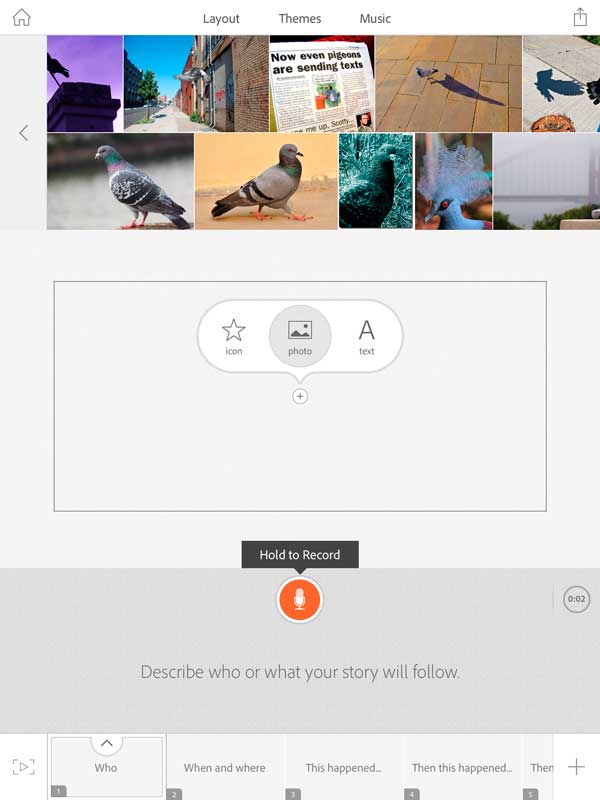 It’s Technology Tuesday, and this month we will cover a simple, free tool to practice combining visuals and oral narration to produce an engaging video! A main goal of using MindWing’s Story Grammar Marker® and ThemeMaker® tools is to provide structure for oral discourse. Narrative or expository maps provide a “plan” for the elements of discourse, along with key words to help students connect their thoughts when formulating a story or explanation. In this way, a culminating activity of using any language map can involve asking students to “connect the dots” in formulating a complete story or using expository language. Adobe Voice, a free, easy-to-use app, provides a fast and motivating way to do this!...

Use Google Search Stories tool to develop narrative and expository language
Every year during the Superbowl, a few commercials stick out from the sea of repetitive beer, snack food, and summer blockbuster ads. This past year, one of the best was Google’s Parisian Love ad, which told the story of an American’s romance with a French woman in a simple and brilliant way, as an unseen character “Googled” various search terms that reflected events in his life. A follow-up ad about a girl switching schools, which I never saw aired, would be even more relatable for kids and is definitely a great model of a complete episode.
These commercials were so popular that Google created a wonderful tool that allows users to make their own Search Stories. Simply pick your search terms and the type of search you want shown in your movie (e.g. web, image, product, map, etc), select the music and upload to a YouTube account (if you have Gmail, you already have a YouTube account)...
Engaging Activities for Character Traits and Social Inference
In social group interventions, we would like our students to develop a sense of each other by building “friend files” (Michelle Garcia Winner). Some of the activities I have mentioned in previous posts can be of assistance in engaging students to share straightforward information about themselves. However, we also want to build students’ abilities to make inferences about each other—for example, wearing an Apple T-shirt might indicate that the person likes computers, and could be a good conversation starter...
Happy Valentine’s Day!
Valentine’s Day approaches! It’s a great time to target students’ understanding of feelings as described in It’s All About The Story, Book I of Mindwing’s Autism Collection! The Feelings icon is, of course, a heart, a common symbol of this holiday. You can use this book’s introduction to the Six Universal Feelings (happy, sad, mad, scared, surprised and disgusted), or Feelings in general as emphasized in the Story Grammar Marker program, along with the two resources presented in the screencast below, to develop students’ narrative language and perspective taking abilities. The screencast describes how to use a resource that almost everyone has access to- Microsoft PowerPoint- and also provides an overview of an interactive poetry generator. Having students make a Valentine for a special person in their lives can be an important way to show they are “thinking about” others and use some great language skills...
Using SGM and Thememaker for Project-Based Learning
Project-Based Learning (PBL) is a recent trend in educational design, and involves presenting students with real-world contextual tasks that relate to curriculum areas. PBL is a great approach for Speech-Language Pathologists and Special Educators to employ as our students benefit from having their learning relate to personally relevant and functional content. To learn more about PBL, watch this great video from Common Craft. One tool that has been integrated as a kind of PBL is the “Webquest,” a set of web pages that outline a task and provide web-based resources for its completion. Webquests are not new, and teachers have been developing them for some time. There is a particular Webquest that I wanted to share with you in this post, particularly because it is one you could use in classroom, small group, or even individual language therapy while integrating Story Grammar Marker® and Thememaker® tools in the process...


Wrapping Up Better Hearing and Speech Month with Sound and “Stories”
 In May, as we celebrate Better Hearing and Speech Month, we look to promote awareness of communication in all its forms, which includes storytelling and discourse. As we close out the month, we wanted to suggest an app that promotes dialogue about communication (and provides a source of expository text), aligns with MindWing’s Thememaker Maps, and suggests a twist on using the SGM® iPad App!
The San Francisco Exploratorium’s free Sound Uncovered app for iPad provides a wealth of information about hearing and sound...


Tool Tuesday: Story Grammar Marker can help your brain!
This month’s post is a support for you and your students’ brains as we get deeper into this new school year. I have tried to make a habit of bibliotherapy, the practice of consuming books— literature or the more “self-help” type—that connects you to emotional regulation and growth. This month, I am reading Hardwiring Happiness: The New Brain Science of Contentment, Calm, and Confidence by Dr. Rick Hanson and I see such a connection to narrative language and Story Grammar Marker!...

Tool Tuesday: The Gift of Words!
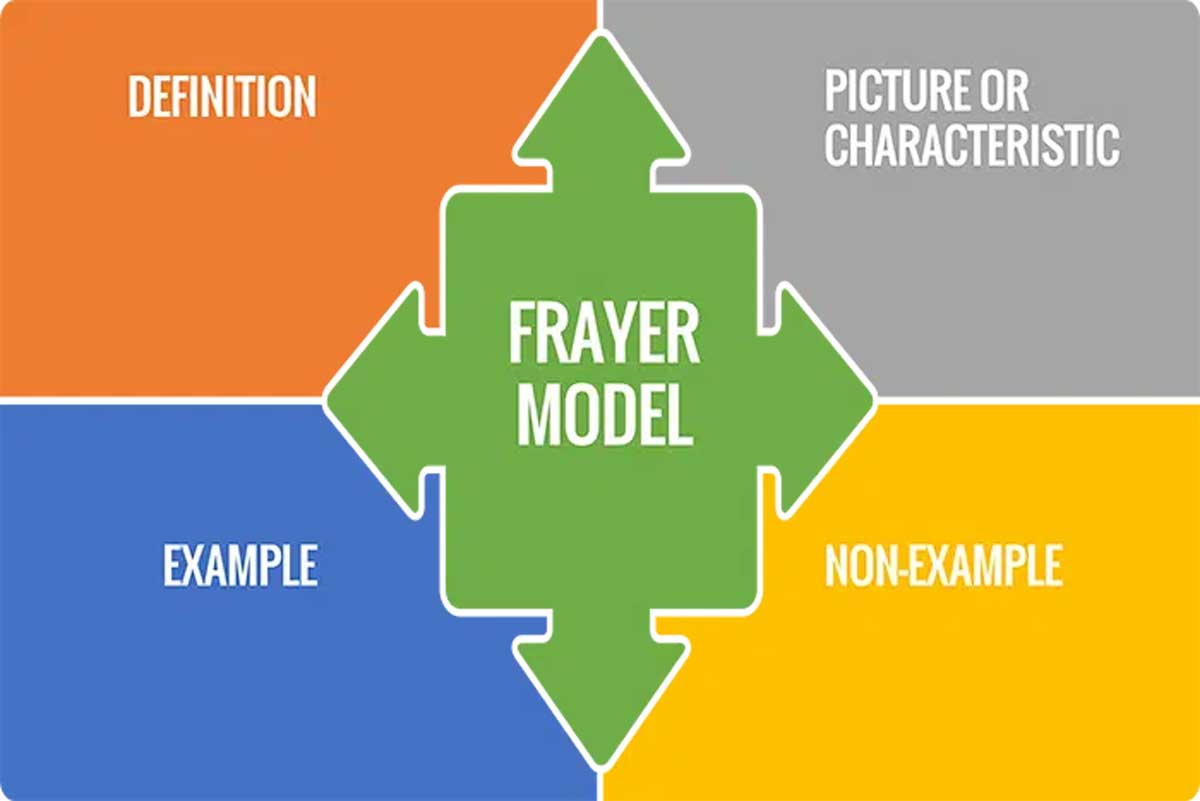
As an SLP, I have always loved working with vocabulary development. Unlocking new words for students is so demonstrably gratifying. We can imagine that they will encounter new words later in their listening, reading, or general daily experiences with confidence, and hopefully find them to be tools to express themselves and even solve problems. Vocabulary is also an easy channel to target in the course of narrative intervention, context being a key to word learning. Targeted vocabulary can be part of the microstructure elements we emphasize...