

Search
105 results found for "Sheila Zagula"


Feelings, Perspective Taking, Theory of Mind, Empathy
 Our recent blog, The Snow Walker, concluded our three-part winter-themed blogs (for this year!). We are hopefully moving towards warmer temperatures, as we begin April. April also begins National Autism Awareness Month. In light of that, throughout the month, our blogs will focus on the development of feelings, perspective taking, theory of mind, and empathy. The Story Grammar Marker® provides a visual, explicit way of analyzing the motivations, feelings, thoughts/mental states and plans of characters (and of people in real life situations).
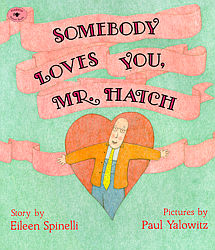
Picture books are excellent resources for helping to develop children’s emotional literacy. As educators, we know that combining visual images and text plays a significant role in working with our students. In an article in The Reading Teacher (Vol. 67, Issue 4, December 2013/2014), Maria Nikolajeva writes that “picturebooks are perfect training fields for young people’s theory of mind and empathy.” In this blog, we are going to use the book Somebody Loves You, Mr. Hatch written by Eileen Spinelli and illustrated by Paul Yalowitz to begin to demonstrate feelings, theory of mind, perspective taking and empathy.


PART 2: Feelings, Perspective Taking, Theory of Mind, Empathy and Mr. Hatch!
 A recent (February 20) MindWing blog contained a link to our Feelings Mini-Poster and a new feelings activity that included a partially completed template unique to The Snow Walker and a blank template for use with other stories of your choice.
The Snow Walker activity used the template with multiple Characters and their perspectives. Today, we will use this same template with a variation to the activity, using it with one Character and multiple Kick-Offs. This will reinforce the concept that a Character has a Feeling in response to a Kick-Off. Our ultimate goal is to lead students to an understanding of the Critical Thinking Triangle. Continuing today from the previous blog with the picturebook Somebody Loves You, Mr. Hatch we have provided the following partially completed template for today’s activity.


Earth Day with Winston of Churchill: One Bear's Battle Against Global Warming
Earth Day is honored around the world on April 22 for the purpose of shining a light on environmental programs and fostering community activism through a variety of different events and activities. Earth Day is the largest civic event in the world! It is celebrated around the globe by people of all cultures, backgrounds, and nationalities. More than a billion people participate in Earth Day Festivities each year. Up here in New England, it is 70 degrees today (although we still have patches of snow on the ground!!) but the warm weather reminded us that Earth Day will be here before we know it!
Earth Day is a great occasion to introduce the book entitled Winston of Churchill: One Bear's Battle Against Global Warming by Jean Davies Okimoto (Author) and Jeremiah Trammell (Illustrator). This picture book is a combination of narrative and expository text structures. The narrative, or story, is about polar bears planning a protest against environmental factors negatively affecting their habitat in Churchill, Canada. It contains all narrative elements of story grammar as well as perspective taking.
Part 3: Feelings, Perspective Taking, Theory of Mind, Empathy and Mr. Hatch!
 Our last blog focused on Mr. Hatch’s feelings in response to three separate kick-offs
  from Somebody Loves You, Mr. Hatch.
We used the new Feelings/Kick-Off Map (below) and looked at the back of the Feelings mini-poster for an additional activity that would lend itself to a center activity. Our goal is to develop an understanding of the relationship between the kick-off and feelings of characters that ultimately leads to an awareness of the critical thinking triangle, which motivates the actions of characters. Today, we will expand on our feelings activities...


The Trumpet of The Swan
By E.B. White -- Names and physical description of Characters are generally not problematic for a child. However, personality traits, motivation, and perspectives are more difficult. Multiple characters may be difficult to hold in memory. Our Character maps help in this area (Braidy the StoryBraid map, Story Grammar Marker map).
Character and Setting Collages for End-of-Year and Summer School!!
A fun end-of-year activity or summer school activity is making a Character or Setting Collage! You can use old magazines to cut out “Characters.” They may be pictures of celebrities, political figures, community leaders, animals, cartoons or advertisements with people who remind you of characters from children’s literature. Collages can be done individually by using Maps from the Story Grammar Marker® Manual or Braidy the StoryBraid® manual (below) and pasting the magazine clippings right on to the Map...
Our Cat Flossie

Read the book to the students. Review the character map and the categories with the children. Reread Flossie to the children having them listen to details to use on the Character Map. Pair the children and give them the Character Map to complete. Have them write the character’s name under the character icon.
With the students participating, complete the Character Map with the class showing the pictures and/or reading the text that relate to the each section of the map. This book lends itself very well to this activity as the text is simple and illustrations are wonderful. We have used this activity with students in K-3, modified according to the needs of the grade level.
Below are two samples from second grade students.


Character Development, Six-Second-Stories™ and Jojo Siwa
 This past week my 5-year-old daughter Casey went to camp. On the first day, I suggested that she wear a T-shirt that depicts something she likes (LOL: Dolls, Unicorns, JoJo Siwa, Mermaids, Teenage Mutant Ninja Turtles, etc.) so that when she is meeting new friends, they can immediately know something she likes and ask her about it. She chose a T-shirt with a picture of “JoJo Siwa,” who is a young, popular performer. By wearing that, new friends will know a little about her as a “character” in a social setting. Upon arriving at camp, within 30 seconds, a Dad and daughter walked in and the Dad said, “You like Jojo Siwa? Avery and her mom saw Jojo Siwa in a concert this summer!”...


SLPs: Be Empowered to Collaborate!
 In the early 1970s, I began my work as a Speech/Language Pathologist in the Hartford, Connecticut Public Schools. The department head, Margaret Kennedy, an Iowa native, was trying to entice someone to teach a “Language Disabilities Class” at Dwight School in the South End. Language Disability was the new term in our field at that time. I had just gotten my Master’s Degree at Penn State and had an enlightening summer course in “language disabilities” under my belt. We used Helmer Myklebust’s text entitled Differential Diagnosis of Language Impairments, as our basic text and studied intervention methodologies such as the Association Method, developed at Central Institute for the Deaf in St. Louis, the ITPA, Auditory Discrimination in Depth (now known as Lindamood/Lindamood)...