
Search
174 results found for "sean sweeney"
Story Patch: A Great Context to Teach Narrative with Story Grammar Marker
There have been a number of apps for iOS (iPad/iPod/iPhone operating system) that have been released in recent months that seem like they were created for use with Story Grammar Marker! Digital Storytelling apps such as Story Patch allow children to create stories while having an emphasis on narrative structure, with choices about character, setting and actions. Students with language disorders will need assistance with organizing, expanding, and adding complexity to their narrative and sentence structure, and that is where you and the SGM come in!
In this video, I give a quick walkthrough of Story Patch (iPad only, currently only $.99- yes, that’s 99 CENTS) and its choices for story creation. You’ll see how its “Create a Story with Help” mode is a great opportunity...


Sharing our own Stories & Social Problem Solving using Story Grammar Marker®
Over the summer I had the kind of “Kickoff” that we all hope to avoid in the course of our ho-hum days. It was a 95-degree school day and I was leaving one setting to go to my private practice and run a social skill group. As I opened my passenger side door to put my bag in the car, an oppressive blast of heat enveloped me. I decided stupidly that it would be a good idea to lean over and start the car so the A/C could have, you know, a millisecond to cool down the car as I walked around toward the driver side. Of course when I got there the door had locked automatically, as it had on the other side. Ugh...
Fantastic Narrative Intervention with Toontastic
 Recently in the Mindwing Blog I featured the Story Patch iPad app, which allows students to create stories according to provided structures or from scratch, resulting in a text and picture-based booklet.
I wanted to follow up that post with a different digital storytelling app that provides an easy means to create and publish dynamic animated stories with spoken audio and music! The app I speak of is Toontastic (an absolute BARGAIN at $1.99), whose creators at Launchpad toys have sought to bridge the gap created when students who primarily express themselves through play are suddenly expected to write stories (i.e. that gap we call “First Grade”). Toontastic uses the iPad’s multitouch interface...


Using QR Codes for Spooky Narrative Development

Over on my blog SpeechTechie this month, I am discussing in a series of posts the incredibly useful technique of using QR codes in language interventions. QR codes, which look like this (at left) were born in the world of marketing (you may have seen them on ads about town) but are making their way into educational settings as an attention-grabbing tool. QR codes can be created very easily and printed, then scanned with free apps available for your smartphone or iPad. When scanned, the app will show text that you entered or a link to a website...


A Wonderful Wordless Video Series for Narrative Development
SLPs and teachers working in language intervention often turn to wordless picture books as a fun context to develop storytelling skills. Series such as Mercer Mayer’s “A Boy, a Dog, and a Frog...” tell stories through pictures and ask readers to tease out the story, inferring the important details and relying on characters’ facial expressions to glean important clues. Similarly popular are David Wiesner’s Tuesday and Sector 7, which depict narrative through fantastical illustrations, and Alexandra Day’s “Carl” series, in which a dog goes to great, un-dog-like lengths to care for his charge, a little girl named Madeleine. I have long been a fan of using such visual narrative materials with students, not only to develop storytelling skills...
Story Mapping and Seasonal Cheer
The holiday season creates a lot of excitement for our students, no matter what holiday they celebrate! This mood can lead to a lot of language and, of course, the opportunity to develop narrative using Story Grammar Marker®. In this post, I’ll be mentioning a couple of resources you can use to acknowledge the season (in varying degrees of sectarianism) while reinforcing use of narrative elements and SGM® icons.
The first is a brief Pixar-like animated short I stumbled across in my blog-surfing routines; I am so glad I found it! As I described in a previous post, wordless videos can be an engaging way to have students “fill in” the language that is not used in the video...
Simple Comics for More Advanced Language
At the elementary school level, we all can attest to seeing students who, narratively, get stuck at what we might call the “andthenandthenandthen” stage. The official name for this stage is the Action Sequence, and it is comprised of Characters, Settings, and a series of Actions with little variation in conjunction use. These students benefit from structures and contexts to move them into using to more complex story elements and cohesive ties such as when, because, and so. Mindwing’s narrative maps, particularly the Reactive Sequence and Abbreviated Episode Maps can provide that structure: (*Maps can be found in the Story Grammar Marker® Teachers’ Manual and the Talk to Write, Write to Learn™ Teachers’ Manual )...
This Vacation Week, Take the Kids to a New Setting: Disneyland!
 In the Northeast at least, February means school vacation week, and who doesn’t like Disney? Disney’s parks are based on its countless characters and, of course, narratives, and the company recently released a FREE iPad app that allows children to explore Disneyland. Disneyland Explorer (iPad only) provides a touch-navigable visual environment allowing kids to visit a huge variety of themed settings (Adventureland, Critter Country, Fantasyland, Frontierland, Tomorrowland, and so on, and that’s only in Disneyland proper) as they tap to reveal additional photos, videos and music. The app is naturally designed to lure tourists to Disney’s parks, but in the process it provides a primer in the element of Setting, providing a context for clinicians to develop students ability to describe locations, themes, and even genres...
Using SGM and Thememaker for Project-Based Learning
Project-Based Learning (PBL) is a recent trend in educational design, and involves presenting students with real-world contextual tasks that relate to curriculum areas. PBL is a great approach for Speech-Language Pathologists and Special Educators to employ as our students benefit from having their learning relate to personally relevant and functional content. To learn more about PBL, watch this great video from Common Craft. One tool that has been integrated as a kind of PBL is the “Webquest,” a set of web pages that outline a task and provide web-based resources for its completion. Webquests are not new, and teachers have been developing them for some time. There is a particular Webquest that I wanted to share with you in this post, particularly because it is one you could use in classroom, small group, or even individual language therapy while integrating Story Grammar Marker® and Thememaker® tools in the process...
You (as a character) Are A Social Detective!

On the heels of Autism Awareness Month, I wanted to highlight a product that provides a terrific complement to use of the Story Grammar Marker® for treatment of social learning and narrative deficits for students with autism spectrum and related disorders. You Are a Social Detective is a CD-ROM product (compatible with Mac and Windows systems) created by Michelle Garcia Winner of Social Thinking® in conjunction with the folks at Social Skill Builders. The program is based on the popular comic of the same name, which provides a visual primer on basic social thinking concepts such as expected and unexpected behaviors and their effects on others, “thinking with the eyes,” and making “smart vs. wacky” guesses. Many children on the autism spectrum require explicit and consistent teaching of these concepts and coaching in their application across the school day...
Taking Paper Out of the Story
The arrival of the iPad has presented us with all kinds of opportunities to boost the engagement factor for our students. In many cases, students will be more engaged in what we would consider “paper and pencil” tasks when we “app-itize” them utilizing some of the tools available as free or cheap apps. For example, in recent posts on my blog SpeechTechie, I discussed how the iBooks app could be used to excite students about printed materials and also present PDF files that are often provided with published intervention materials (you don’t need to read those posts to understand this one, but they provide some related information)...
A Gift to a Character!

‘Tis the season! No matter what one’s religious beliefs are, the holiday season involves giving, and this is a context that is ripe for critical thinking, description, perspective-taking, and social scripts. It can be quite difficult to engineer learning situations in which children are giving each other actual gifts, what with the need for stores, money, and the fine-motor aspects of wrapping. However, technology can cut through some of that sticky tape for us and provide us with a virtual-gift-giving activity!
I first learned of the Gift Wrap App (FREE for iPad)...


Exploring Action Sequences with Apps and the Common Core Standards
 The narrative skill of describing and sequencing actions that can occur within a particular place is so relevant to the classroom curriculum, most recently redefined with the arrival of the Common Core State Standards. The classroom itself is a place where children learn, play, read, write, draw, listen, laugh, and sometimes argue, not necessarily in that order! Nearly every academic topic could be framed as an action sequence, while many children requiring narrative language intervention can get stuck at the previous level of naming, the descriptive sequence. We can help scaffold them to the next level using Story Grammar Marker® and strategies from MindWing’s recent book, The “Core” of the Core: Using Story Grammar Marker® and Other MindWing Concepts Tools To Support Students in Meeting Grade-Level Common Core State Standards...


StoryBird
 StoryBird is very helpful for using technology to develop story telling and story writing skills. However, while providing artwork and a very simple platform for adding text, it does not provide the narrative structure necessary for writing the actual text of the story. Using Story Grammar Marker, students can have the structure to know what parts go into the story. The Common Core State Standards call for the blending of narrative and expository text in lessons as well as integrating technology and multimedia. The following lesson demonstrates it...
“The Incredible Flexible You” and Braidy Make a Great Pair!
April is Autism Awareness Month, and here on the blog we wanted to showcase a connection between Mindwing’s tools and interventions that target social learning for children with autism!
Over the past year since its release, I have found The Incredible Flexible You™ Curriculum Set (Volume 1) by Ryan Hendrix, Kari Zweber Palmer, Nancy Tarshis and Michelle Garcia Winner and published via Social Thinking® to be an invaluable teaching tool! Targeted to early learners—preschool through 2nd grade, but adaptable to older students requiring basic social learning lessons—the curriculum set aims to develop key social cognitive concepts through stories and play. The five storybooks that come with Volume 1 set the context for many lessons and play activities as the main characters, Evan, Ellie, Jessie and Molly, learn and demonstrate the core concepts in the set...


Wrapping Up Better Hearing and Speech Month with Sound and “Stories”
 In May, as we celebrate Better Hearing and Speech Month, we look to promote awareness of communication in all its forms, which includes storytelling and discourse. As we close out the month, we wanted to suggest an app that promotes dialogue about communication (and provides a source of expository text), aligns with MindWing’s Thememaker Maps, and suggests a twist on using the SGM® iPad App!
The San Francisco Exploratorium’s free Sound Uncovered app for iPad provides a wealth of information about hearing and sound...
Settings and the Five Senses

The book that my friends and I are reading in July for our Book Club is the best seller Valley of the Dolls by Jacqueline Susann. I am only a couple of chapters in, but the first few sentences in this book struck me, because this passage exemplifies the idea of authors’ ability to create “movies” in their readers’ minds.
"The temperature hit ninety degrees the day she arrived. New York was steaming — an angry concrete animal caught unawares in an unseasonable hot spell. But she didn't mind the heat or the littered midway called Times Square. She thought New York was the most exciting city in the world" (Susann, 1966). The author used many senses to describe the setting; how the heat felt, what she saw and heard and smelled. Susann also used figurative language and personification (“angry concrete animal”) to create a very vivid mental image of New York City...
Narrative is “Having a Moment” in Research Circles
Narrative seems to be “having a moment” in research circles, with a number of recent articles being published related to the why and how of developing storytelling skills. One of the most exciting pieces is “Classroom-Based Narrative and Vocabulary Instruction: Results of an Early-Stage, Nonrandomized Comparison Study,” (Gillam, Olszewski, Fargo & Gillam, 2014) detailing a study primarily conducted by Utah State University and published in Language, Speech and Hearing Services in Schools (and available to ASHA members in full text here).
This study com-pared the results of narrative and vocabulary instruction via a traditional versus an experimental approach in two first grade classrooms...
Complete and Share SGM® Story Maps (Paperless!) with Google Drive
 The MindWing Narrative and Expository Maps are to me an invaluable part of the visual language tools within the Braidy the StoryBraid®, Story Grammar Marker®, and ThemeMaker® programs. Of course the SGM iPad App gives you one option to work with the icons in these programs digitally while scaffolding language development--but it’s not the only way!
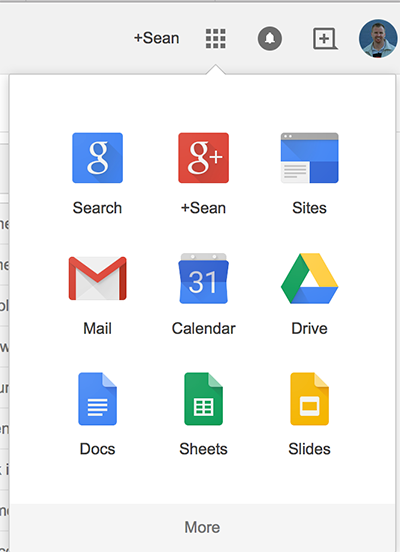
Google Apps for Education is a resource that is now implemented in many public school districts, allowing for digital creation, storage, sharing, and collaboration on word processing and other types of documents. The power of Google Apps (a.k.a. “Drive” or “Docs” — they all pretty much mean the same thing) is that it gives you access to your files from any computer or device, and allows you to share important information between key staff members without handing off any paper! If your district has not implemented Google’s tools, you can also access all of them for free with a Google account (i.e. if you have a Gmail, you can just navigate to your Google Drive). Click on the “matrix” of squares in any Google account to navigate between apps, including Google Drive...
Getting the “Story” of a Situation
In working with SLPs, teachers, other professionals and graduate students around the myriad ways I find Story Grammar Marker® useful in intervention, I often emphasize how narrative is at the crux of language functioning and social cognition. This post will explore this idea with an eye toward the concept of situational awareness, an area we can look at as critical for many of our students with social learning challenges--an appropriate topic for May as it is Better Speech and Hearing Month!
In their article, Social Learning and Social Functioning: Social Thinking's Cascade of Social Functioning, Michelle Garcia Winner and Pamela Crooke describe how awareness of situations serves as the foundation of interactions. Social functioning can then be considered a "cascade" of additional skills such as self-awareness within a situation (and understanding of one's own possible role in the ongoing situation) and abstracting and interpreting the ongoing language and actions of others.
Technology Tuesday: Vocabulary, Summer Programming, and Story Grammar Marker®!
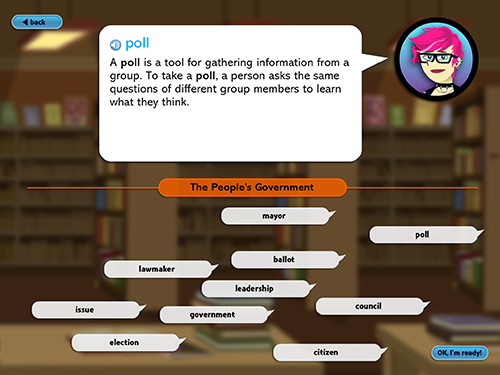 Some years ago as an SLP in the elementary school setting, I was informed by a colleague of Isabel Beck’s revolutionary approach to targeting vocabulary. In the book Bringing Words to Life: Robust Vocabulary Development, co-written with Margaret McKeown and Linda Kucan, the authors describe a methodology for building vocabulary revolving around key principles...
Welcome to MindWing's New Blog!
As you visit our blog, please feel free to “SHARE” this information with your friends and colleagues by clicking on the links below. Within this blog we hope to infuse your knowledge and use of MindWing’s methodology with new lesson ideas, new research findings and new products! Maryellen Rooney Moreau, M.Ed. CCC-SLP will be blogging about her current thoughts and research about oral language, comprehension, writing, critical thinking, narrative & expository text. Sean J. Sweeney, M.S, M.Ed, CCC-SLP (a longtime friend & colleague, but new to MindWing’s team) will be blogging about technology integration with MindWing’s methodology. Sean, an SLP, also has a degree in Instructional Technology and has hundreds of fantastic technology-based ideas using Story Grammar Marker®, Braidy the StoryBraid®, Talk to Write, Write to Learn™ and ThemeMaker™. We are looking forward to his exciting lessons! I (Sheila Moreau) will be blogging about new products, new product uses, success stories, and Professional Development information & locations and tidbits about our travels throughout the country as we bring MindWing’s message to more and more educators and parents. Enjoy!


Character Development, Six-Second-Stories™ and Jojo Siwa
 This past week my 5-year-old daughter Casey went to camp. On the first day, I suggested that she wear a T-shirt that depicts something she likes (LOL: Dolls, Unicorns, JoJo Siwa, Mermaids, Teenage Mutant Ninja Turtles, etc.) so that when she is meeting new friends, they can immediately know something she likes and ask her about it. She chose a T-shirt with a picture of “JoJo Siwa,” who is a young, popular performer. By wearing that, new friends will know a little about her as a “character” in a social setting. Upon arriving at camp, within 30 seconds, a Dad and daughter walked in and the Dad said, “You like Jojo Siwa? Avery and her mom saw Jojo Siwa in a concert this summer!”...


SGM Summer Reading List - Part 2
 We received many positive comments about our blog last week, Story Grammar Marker Summer Reading List, which featured ten resources focusing on the Complete Episode. This week, we have included eight previous blogs that focus on the concept of Character. Please review them all, as they span across multiple grade levels. This sampling of Character blogs demonstrates the versatility of the SGM! There are many more resources to support the use of our SGM tools available free of charge on our MindWing website...


NEW Digital SGM Icons, FREE Webinar & Online PD
 COVID19 is certainly the biggest “Kick-Off” that many of us have ever experienced. As teachers, specialists and/or parents, this thrusts you into the position of having to completely change how you teach, or how you deliver services or has put you into the homeschooling role. At MindWing Concepts, we want to do what we can to assist you with these distance learning and homeschooling challenges as well as offer alternative ways to access training and PD. Maryellen will continue to “GO LIVE” on social media daily and we will continue to offer FREE Webinars. And, you asked and we’ve answered: DIGITAL VERSIONS OF OUR TRADEMARKED ICONS...


Part 4: Feelings, Perspective Taking, Theory of Mind, Empathy & Mr. Hatch!
 During National Autism Awareness Month, we have been using text and illustrations of the picture book Somebody Loves You, Mr. Hatch to enhance our teaching of feelings using the SGM heart icon, Feelings mini poster, and newly created maps. This is the final post of the Mr. Hatch series.
After completing these activities, older students may enjoy using the same Feelings template we began this blog with and a You Tube presentation of The Lost Thing by Shaun Tan. Click here to watch The Lost Thing...


Coming Late Spring: the Story Grammar Marker® App: You are A Star Reporter!
It has been a long time coming, but MindWing Concepts has partnered with three talented Speech Language Pathologists: Meghan Graham, Karen Head and Jill Perry of All4MyChild www.all4mychild.com) to create the Story Grammar Marker® App! All4MyChild is the creator of The Bag Game©, the Social Adventures© App, Talking Train© and Fun Timer©. They have used Story Grammar Marker® extensively for years. As regular readers of our Blog know, Sean Sweeney (www.speechtechie.com) has written many, many Blog entries where he teaches how to incorporate Story Grammar Marker®, ThemeMaker® and our other products with various Apps and web-based technologies. His expertise, enthusiasm and ingenuity has always been an inspiration to MindWing, helping us to see how this platform is a "must" for SGM®. It will be exciting to now see the use of Story Grammar Marker® in its own App format. Thanks to the creativity and technical knowledge of all4mychild.com, the SGM® App has become a reality.


Valentine’s Day Activities With Llama Llama and Gilroy Goat
 Valentine’s Day was always one of the most enjoyable days for students when I taught kindergarten, and Anna Dewdney’s Llama Llama books were popular with this age group. Llama Llama Be My Valentine! is a Penguin Young Reader book based on an episode of Llama Llama’s animated Netflix television series. Below are some of the ways I used this selection recently with groups of kindergarten and first graders of varying skill levels. Modify as you wish, depending on your goals/objectives and students...


3 Ways SGM® Bolsters the Role of Narrative Development in Collaboration

Orange County Public Schools
Orlando, Florida 2007
As a speech language pathologist, I am a member of two of American Speech, Language and Hearing Association’s (ASHA) Special Interest Groups: Divisions 1 & 16. Both relate to schools and to students who are having problems with language and literacy. It has long been my thought, as many of you know, that discourse level language skills, those that extend beyond the sentence as students strive to express personal stories, story retells and expression of content area knowledge, are oral language skills that are vital and foundational to academic learning and social success...


SLPs: Be Empowered to Collaborate!
 In the early 1970s, I began my work as a Speech/Language Pathologist in the Hartford, Connecticut Public Schools. The department head, Margaret Kennedy, an Iowa native, was trying to entice someone to teach a “Language Disabilities Class” at Dwight School in the South End. Language Disability was the new term in our field at that time. I had just gotten my Master’s Degree at Penn State and had an enlightening summer course in “language disabilities” under my belt. We used Helmer Myklebust’s text entitled Differential Diagnosis of Language Impairments, as our basic text and studied intervention methodologies such as the Association Method, developed at Central Institute for the Deaf in St. Louis, the ITPA, Auditory Discrimination in Depth (now known as Lindamood/Lindamood)...