
Search
175 results found for "sean sweeney"


Tool Tuesday: May the Fourth and the Picture Books of Jeffrey Brown
This post comes just a little in advance of a timely “holiday!” May the Fourth (Be With You) is a great day to celebrate students’ widespread interest in all things Star Wars. One of my favorite resources over the years has been Jeffrey Brown’s series, which started with Darth Vader and Son. This and other books by Brown require a stretch of the imagination: what if Luke (and other characters) actually grew up with Vader as a father figure?...


Tool Tuesday: National Parks are just “meh”
Clinicians and educators are always looking for high-interest materials that naturally invite both narrative and expository language use. I lead a session each semester at Boston University in which graduate students in speech-language pathology analyze various picture books for their narrative and expository content. One of the guiding questions is always “What’s your post-activity?”...

Tool Tuesday: The Narrative/Social Self-Regulation Connection
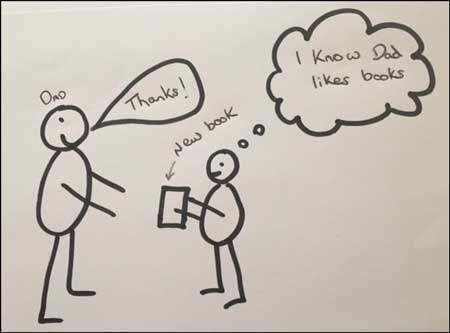
As an SLP working in a social educator role, I am frequently asked to process events with my students that have occurred outside of our sessions. I find it particularly helpful to add visual support to these conversations with students, so my go-to is to use sketches of stick figures, movement, word and thought bubbles, along with other situational elements, ala Comic Strip Conversations, an approach originally described by Carol Gray. Teresa Ukrainetz has also been a champion of the value of sketching in strategies such as Stickwriting Stories and Sketch and Speak…

Tool Tuesday: Summer Study Series, Part 2–Thinking about CRISP weather?
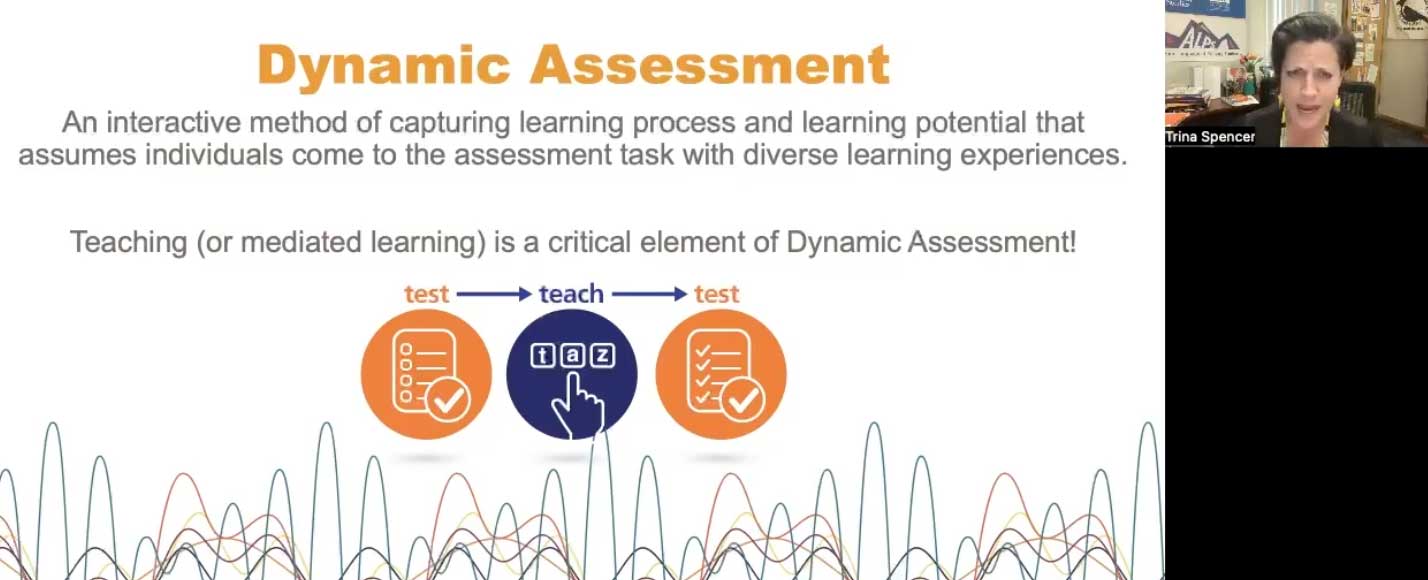
The American Speech‑Language‑Hearing Association (ASHA)’s CRISP Committee (Clinical Research, Implementation Science, and Evidence-Based Practice) has developed a series of nine modules on evidence‑based and best practices assessment, which would serve as a great self-guided study activity as we think about the fall! The site, hosted on ASHA’s Teaching, Learning & Research (TLR) Hub, grabbed my eye since it relates to narrative as a critical aspect of any speech-language assessment, and in particular, MindWing’s tools for supporting these processes, including Story Grammar Marker®...


Tool Tuesday: Scribblenauts!
Lately, I’ve been coming back to an oldie-but-goodie resource, SCRIBBLENAUTS (“Remix” version available for iPad or iPhone for $.99 with tons of content, other options explored below). Scribblenauts is a puzzle game where players can type in upwards of 20,000 nouns, even with adjective modifiers, to bring in objects that help solve stated problems within the scene. As such, it provides an open-ended “sandbox” with a range of stories solvable with actions and elaborated noun phrases. I like to think of Scribblenauts as a series of mini-lessons, one of those 5-10 min “rewards” for students that are actually language therapy activities...


Tool Tuesday: ReVISITING Google Earth
With the school year back in full swing, our posts will resume highlighting simple tools, tech or non-tech, that we can use to teach about narrative and expository language in conjunction with MindWing’s methodology. In the past, I have highlighted the now-simpler Google Earth and wanted to revisit this topic in the light of some recent sessions I have had with students. Though Google Earth initially was a complicated downloadable application, it has evolved into a web version accessible by simply navigating to it in your browser (earth.google.com).


Tool Tuesday: Summer Study Series Part 4—“A Recent Look at Evidence-Based Expository Intervention”
In this 4th and final entry in the Summer Study Series for 2024, we will circle back to the expository side of language. Teresa Ukrainetz has always been one of my go-to experts on a number of aspects of discourse, and literally wrote the book on “Conceptualized Language Intervention.” It was with some excitement that I discovered her recent article, “Evidence-Based Expository Intervention: A Tutorial for Speech-Language Pathologists” (2024).


Tool Tuesday: ESCAPE!
Escape rooms are popular diversions in real life and are inherently story-based through their varied themes. These experiences wrap language and visual cues into fun problem-solving situations, but can be pretty difficult to simulate in educational and intervention situations. Digital formats make this much easier! Check out Hooda Math’s huge variety of free escape games—my favorite selections are the US State and National Park collections. These are always a hit with students and, though on their surface seem simple point-and-click games, offer a lot in terms of general language and tie-ins with expository text...


Tech Tuesday/Summer Study Series: Listening on Assessments
As many narratives could tell us (think of Shirley Jackson’s “The Lottery” as an extreme example), just because something “has always been done this way” does not mean it shouldn’t be questioned. This month we’ll turn that concept into thinking about standardized tests, too-long THE> determining factor in whether students do or do not receive speech and language interventions, particularly in the public school setting. Without inserting my POV too much into this topic, let’s keep the Summer Study Series focus and take a look at the recent review article published in Language, Speech and Hearing Services in Schools, A Critical Analysis of Standardized Testing in Speech and Language Therapy (Nair, Farah & Cushing, 2023). The authors recount the history of speech and language intervention as dating back to the Middle Ages, with recognition of speech disabilities and efforts to remediate seen in cultures such as ancient India...


Tech Tuesday/Summer Study Series—“Another Narrative-Related Meta-Analysis!”
 It’s great to have another resource due to the publication of this study, Investigating Narrative Performance in Children With Developmental Language Disorder: A Systematic Review and Meta-Analysis (Winters, Jasso, Pustejovsky & Byrd, 2022). “Thus the story grammar model appears to be a valid representation of how individuals organize story information in order to encode, understand and retrieve stories.” The Journal of Speech, Language and Hearing Research is more technical than some publications, but I’ve provided some salient points below. One way this study differs from the previously discussed meta-analysis is that it focuses on assessment rather than intervention. Among its aims are looking at different narrative measures such as macrostructure, microstructure, and internal state language, and identifying which may have a better sensitivity in identifying developmental language disorder (DLD)...


Tech Tuesday: Teaching through the Thought Bubble
 Picture books are one of our best and most engaging narrative teaching tools, and I love especially when I find a series to share with my students—and you! Series books allow for special opportunities to establish flow (both contextual and psychological) with similar character behaviors, narrative patterns, and themes. I have long been an admirer of author/illustrator Jon Klassen due to the power of his minimalist illustrations, which are beautiful but also witty, and establish character emotion primarily through exaggerated eye expressions. Recently I discovered he had illustrated a trilogy with Mac Burnett now called the Shape Trilogy, consisting of (in this order, which actually is important), Triangle, Square, and Circle. In these books, we can follow the antics of several shape characters as they interact with friends.


Tech Tuesday/Summer Study Series: A Continuum of Explicit to Implicit Learning
In this penultimate entry in the 2022 Summer Study Series, we’ll explore how the use of tools such as Story Grammar Marker® can gibe with models of instruction and learning. Baron and Yarbel’s (2022, brand new!) An Implicit–Explicit Framework for Intervention Methods in Developmental Language Disorder is a tutorial describing theories of learning related to language disorder and associated modes of intervention. This article explores a neurologically based understanding of how we might learn explicitly: consciously trying to memorize information, facts, or apply skills, vs. implicitly: picking something up naturalistically and without really trying. These ways of learning can inform how we use tools such as SGM® particularly with young children with language disorders...


Tech Tuesday: Make a Vocabulary “Story”
 Hello! You are here because stories are fun and engaging, right? Well, they also are strategic for teaching and learning. The National Council of Teachers of English(NCTE) states that story forms can aid in memory and recall across the curriculum: “Listeners encounter both familiar and new language patterns through story. They learn new words or new contexts for already familiar words.” It just makes sense! The context, engagement and emotional activation of a story can assist in any vocabulary related to that story. In this post, I’ll be detailing a number of tech- and non-tech resources for using vocabulary “stories.” Check out Beck, McKeowan, and Kucan’s Bringing Words to Life. This seminal vocabulary-teaching text discusses the concept of Tier 2 vocabulary words (robust words which link to concepts kids understand, such as the word final), and teaching them through context, kid-friendly definitions and word play.


Tech Tuesday: Summer Study Series #2, Stories of a School Year Like No Other
 Continuing here with 2021’s Summer Study Series, this post will be a little different. Rather than focusing on analysis of one article for further learning, I’d like to point you in the direction of a few resources related to a theme: mental health and recovery from the COVID-19 pandemic. We’ve all heard and experienced it in some way, at this point almost a cliché; it was a school year like no other. Loss of a feeling of safety, of connection, of experiences, of freedoms, perhaps of health or people in our lives, these all pervade our memories of the past year. I’m of the mindset that every little bit of processing is potentially helpful. However, you may feel uncomfortable or unequipped to go into these topics in personal narrative with your students. For some support, I’d like to point you in a few directions...


Tech Tuesday: Technology Brings Stories to “Give”
 The “Give a Story to Get a Story” technique is one we all know makes sense. We’ve seen what often happens when we ask students to produce a narrative out of the blue. More often than not, we are rewarded with a blank stare! The use of the “Conversational Map,” the formal name for this technique, was first described by Peterson and McCabe (1983) and, in web-accessible articles, adapted by McCabe and Rollins (1994) and Hadley (1998). In my experience, these articles hit on principles applicable when working with preschool, through adult clients, who can all benefit from language scaffolding...


Tech Tuesday: Summer Study Series and “What Does It Mean to Be Social?”
 For our last 😢entry in our “Summer Study Series” for 2020, we look at a perspective on social cognition with a twist: how are children with significant speech sound disorders, such as apraxia of speech, impacted within the sequence of developing social competencies? This article, What Does It Mean to Be Social? Defining the Social Landscape for Children With Childhood Apraxia of Speech, is provided by Nancy Tarshis, Michelle Garcia Winner, and Pamela Crooke (2020) and was released within ASHA’s Perspectives (Special Interest Group 2) journal available to anyone with a SIG membership in any specialty. For others, the article is behind a paywall, so I hope this review at least will be helpful...


Tech Tuesday/Summer Study Series: Narrative and Autism Spectrum Disorder
 I am frequently asked to conduct evaluations encompassing social cognition and pragmatic language and always find it extremely valuable to include a detailed assessment of narrative language. However, in doing so, and having reviewed previous assessments of these students, I often find that I am like a newcomer to a desert landmark, standing there saying “Hey, look at this…?” Why haven’t the examiners before me documented and then suggested interventions around these inevitably present narrative language issues?...


Tech Tuesday: Supporting Narrative Development and Emotional Vocabulary

Illustration by Ariel Davis for NPR
I’m a big NPR person. It’s a great resource for listening, and for narrative! This past month I was intrigued by a feature on “EMOTIONAL GRANULARITY”—being able to name or describe your emotions more specifically. The author described an increase in stress in his life being alleviated by his working on “learning more emotion words and emotion concepts from one’s culture.” There was research to support his assertion that this self-identification was of help; according to Kashdan, Barrett, and McKnight (2015), “evidence suggests that interventions designed to improve emotion differentiation can both reduce psychological problems and increase various strands of well-being.” We can reframe this information in the light of what we might usually address as speech-language pathologists and literacy interventionists...
Tech Tuesday: Back to School Part 3—Considering Narrative Language Applications of Google Tools
 Let’s consider some uses of one of the most commonly applied EdTech Tools: Google’s Apps or “G Suite.” G Suite has become a go-to within schools for a number of reasons, including its price (free), versatility and ease of use of productivity tools such as Docs and Slides, word processing and presentation creators, respectively. Additionally, G Suite is easily used on inexpensive Chromebook computers, which allow schools to put technology in a wide range of hands across the day. Chromebooks are easy to manage and essentially only run a Chrome web browser, making them a good match for use with the web-based G Suite. SLPs and literacy interventionists may see G Suite as too basic to consider for storytelling and narrative language opportunities. However, the opportunities to use images, drawings, and other visual supports are varied, easy to use, and worth considering—particularly when seeking to implement MindWing’s methodologies such as Story Grammar Marker® and ThemeMaker® within classroom settings, G Suite features will make it easy for students to apply what they are learning about narrative and expository language!...


Tech Tuesday: Back to School Part 2—Five Great Resources for Demonstrating Narrative and Informational Expression
 Using interactive apps and websites, we can help students deconstruct discourse and see its essential parts. However, technology can also provide a space—a blank slate, so to speak—that we can use to help students use narrative and expository elements and icons to build language through engaging mini-projects using apps for creation. The realm of “digital storytelling” has expanded, and at the same time became more simplified with the arrival of easy-to-use apps. iPad and Android “creation” apps (oft referred to as apps that allow students to “show what they know”) can be used to make picture collages, books, animations or videos that tell a story or give information...


Tech Tuesday: Contextualizing Narrative and Social Interventions (Minecrafting)
 Maybe you’ve heard of Minecraft. In the past several years, this gaming universe has become particularly popular with the elementary set, and also has sparked efforts to incorporate its visually engaging and spatially useful interface into educational contexts. This post was sparked by some questions from a reader of this blog who wrote me to inquire whether I use Minecraft in my work and as a language development context, so I thought I might elaborate on that here. Complicated, right? My philosophy on technology integration in speech and language work has always been that tech is a tool to establish context, engagement, foster interaction and provide visual supports. It’s for this reason that complex, extended activities with technology such as Minecraft are not something I gravitate towards, though they are certainly possible if well planned. After all, we tend to have a limited amount of time for intervention with our students, and every minute is important...


Tech Tuesday: Plotagon’s Emotions Connect to the 6 Universal Feelings
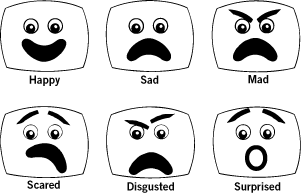 The 6 Universal Feelings are a research-based model that runs throughout MindWing’s methodology and tools. Through psychological research, the emotions of “happy, sad, mad, scared, disgusted, surprised” have been identified as universally recognizable among human beings, and “hardwired”—so to speak—dating back to ancient efforts to survive in the wild. More sophisticated emotions can be seen to be combinations of these basic feelings, or qualified ones. For example, being “shocked” involves being surprised about an unpleasant event...


Tech Tuesday: Spooky Stories, Revisited with Kick-Offs!
 The Toontastic app has long been a good companion for interventions with Story Grammar Marker®. The original app, released in the early 2010s, was designed with scaffolding in mind, as a “patch,” so to speak, on the problem of decreased play time and increased expectations for students to “write stories” as they reached first grade. Toontastic has undergone some changes after being purchased by Google a few years ago, and is now available as a free “Toontastic 3D” version for both iPad and Android...


Tech Tuesday: This summer, play “Duck Duck Moose” to consider narrative and expository language-building opportunities
 One helpful strategy in locating apps useful in language intervention is to know and follow (via their Facebook page, Twitter or Website) the developers. We have previously mentioned developers such as Sago Mini, Toca Boca, Social Skill Builder, and LEGO®. KHAN ACADEMY, the Edtech force known most for distribution of expository video related to curriculum, recently bought the development company Duck Duck Moose, and their terrific apps continue to be offered free of charge. In this post I’ll talk about a few of them, along with great opportunities to use them as a context or context-builder alongside MindWing’s tools for narrative and expository language development...


Tech Tuesday: A Picture is Worth...a Story!
 They say the best camera is the one you have with you. The readiness with which we can document snippets of our own lives seems to have made life more visual...just look at social media. Our own images create opportunities for narrative language intervention, just as our own stories do. In Hadley’s (1998) Language Sampling Protocols for Eliciting Text-Level Discourse, the strategy of the conversation map—”give a story to get a story”—is used across narrative genres to provide a model and pragmatic rationale for “eliciting optimal samples of extended discourse.” The activities contained within the article provide great stimuli for obtaining language samples, but this principle of modeling and using personal stories certainly applies to intervention as well...


Tech Tuesday: Tell Stories with Pocoyo
 Pocoyo is a British-Spanish television series featuring the adventures of a young boy and his friends: Pato the duck, Ellie the elephant and Loula, a dog. I first came upon the Pocoyo series accidentally, as one of its videos was contained in the terrific ABC apps from Peapod Labs. It turned out my young client is a BIG fan. I easily found other Pocoyo resources on YouTube (as is often the case) and discovered that the series’ vignettes were perfect for targeting both macrostructure with Braidy, the StoryBraid®, microstructure aspects (verbs and pronouns) as well as Social Thinking® and play skills, all targets for my client...


Tech Tuesday: Chapter Books and Stickwriting, a Complementary Visual Strategy
 Using chapter books, which provide richer and yet more difficult narratives older students must tackle, has been a focus of the MindWing Blog this school year. In several of my posts, I have discussed tech-related avenues to getting the context of chapter books your students may be reading in class (to serve as topics for narrative intervention activities with SGM®), as well as apps that can visually represent the Critical Thinking Triangle®, a great support to review the narrative gist of chapters within a book. In this post, we are going to take a look at a great chapter book to use along with SGM®, The SOS File by Betsy Byars, Betsy Duffy, and Laurie Myers, along with a strategy that aligns with narrative intervention, Stickwriting, or representing narrative elements through quick sketches...


Tech Tuesday: Using Emoji in Narrative Analysis

A friend’s Emoji creation in the SnapChat app.
In selecting topics for Technology Tuesday, I find it helpful to “piggy back” on my own clinical work, of course, but also on topics that have recently appeared on this blog. Recently, Sheila Moreau wrote in a MindWing blog about the power of emoji for understanding narrative events, identifying emotions, and expressing empathy, particularly in relation to Facebook’s recent incorporation of a range of reactions available to use in response to others’ posts. While emoji are a narrative phenomenon changing our (and teens’) reaction to social media (note that they have always been present in the “much-cooler” Snapchat), there are also ways to use them as visual tools out of the context of social media, a place where clinicians may not “want to go” with students...
Character, Social Thinking, and the Avatar
 Many of us think of the word “avatar” and have trouble separating the idea from that blockbuster movie about tall blue people-ish beings on an alien planet. In Avatar, the main character is disabled and uses an avatar to assume the form of an alien being and interact with their civilization. So we’re not that far off; an avatar is a visual representation of someone within an environment, usually a computerized one. Because there are many simple websites that create avatars, they actually have a place in our interventions as well! Using avatar makers with kids motivates them to visually represent and describe themselves to peers...

Dinosaurs, Narrative, and Flexible Thinking
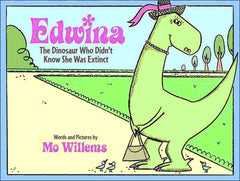
I always love finding resources that serve as a context for addressing many speech and language-related skills. The wonderful book Edwina — The Dinosaur Who Didn’t Know She was Extinct by Mo Willems is one of those resources; it can be used to target narrative and expository formulation, as well as social thinking skills in several areas.
To begin with, Edwina is a story that will engage and delight children from early to late elementary ages, beginning with its title and the name of the main character, Reginald Von Hoobie-Doobie. Reginald has a problem...


Sharing our own Stories & Social Problem Solving using Story Grammar Marker®
Over the summer I had the kind of “Kickoff” that we all hope to avoid in the course of our ho-hum days. It was a 95-degree school day and I was leaving one setting to go to my private practice and run a social skill group. As I opened my passenger side door to put my bag in the car, an oppressive blast of heat enveloped me. I decided stupidly that it would be a good idea to lean over and start the car so the A/C could have, you know, a millisecond to cool down the car as I walked around toward the driver side. Of course when I got there the door had locked automatically, as it had on the other side. Ugh...


A Wonderful Wordless Video Series for Narrative Development
SLPs and teachers working in language intervention often turn to wordless picture books as a fun context to develop storytelling skills. Series such as Mercer Mayer’s “A Boy, a Dog, and a Frog...” tell stories through pictures and ask readers to tease out the story, inferring the important details and relying on characters’ facial expressions to glean important clues. Similarly popular are David Wiesner’s Tuesday and Sector 7, which depict narrative through fantastical illustrations, and Alexandra Day’s “Carl” series, in which a dog goes to great, un-dog-like lengths to care for his charge, a little girl named Madeleine. I have long been a fan of using such visual narrative materials with students, not only to develop storytelling skills...
This Vacation Week, Take the Kids to a New Setting: Disneyland!
 In the Northeast at least, February means school vacation week, and who doesn’t like Disney? Disney’s parks are based on its countless characters and, of course, narratives, and the company recently released a FREE iPad app that allows children to explore Disneyland. Disneyland Explorer (iPad only) provides a touch-navigable visual environment allowing kids to visit a huge variety of themed settings (Adventureland, Critter Country, Fantasyland, Frontierland, Tomorrowland, and so on, and that’s only in Disneyland proper) as they tap to reveal additional photos, videos and music. The app is naturally designed to lure tourists to Disney’s parks, but in the process it provides a primer in the element of Setting, providing a context for clinicians to develop students ability to describe locations, themes, and even genres...
You (as a character) Are A Social Detective!

On the heels of Autism Awareness Month, I wanted to highlight a product that provides a terrific complement to use of the Story Grammar Marker® for treatment of social learning and narrative deficits for students with autism spectrum and related disorders. You Are a Social Detective is a CD-ROM product (compatible with Mac and Windows systems) created by Michelle Garcia Winner of Social Thinking® in conjunction with the folks at Social Skill Builders. The program is based on the popular comic of the same name, which provides a visual primer on basic social thinking concepts such as expected and unexpected behaviors and their effects on others, “thinking with the eyes,” and making “smart vs. wacky” guesses. Many children on the autism spectrum require explicit and consistent teaching of these concepts and coaching in their application across the school day...
Taking Paper Out of the Story
The arrival of the iPad has presented us with all kinds of opportunities to boost the engagement factor for our students. In many cases, students will be more engaged in what we would consider “paper and pencil” tasks when we “app-itize” them utilizing some of the tools available as free or cheap apps. For example, in recent posts on my blog SpeechTechie, I discussed how the iBooks app could be used to excite students about printed materials and also present PDF files that are often provided with published intervention materials (you don’t need to read those posts to understand this one, but they provide some related information)...
Settings and the Five Senses

The book that my friends and I are reading in July for our Book Club is the best seller Valley of the Dolls by Jacqueline Susann. I am only a couple of chapters in, but the first few sentences in this book struck me, because this passage exemplifies the idea of authors’ ability to create “movies” in their readers’ minds.
"The temperature hit ninety degrees the day she arrived. New York was steaming — an angry concrete animal caught unawares in an unseasonable hot spell. But she didn't mind the heat or the littered midway called Times Square. She thought New York was the most exciting city in the world" (Susann, 1966). The author used many senses to describe the setting; how the heat felt, what she saw and heard and smelled. Susann also used figurative language and personification (“angry concrete animal”) to create a very vivid mental image of New York City...
Getting the “Story” of a Situation
In working with SLPs, teachers, other professionals and graduate students around the myriad ways I find Story Grammar Marker® useful in intervention, I often emphasize how narrative is at the crux of language functioning and social cognition. This post will explore this idea with an eye toward the concept of situational awareness, an area we can look at as critical for many of our students with social learning challenges--an appropriate topic for May as it is Better Speech and Hearing Month!
In their article, Social Learning and Social Functioning: Social Thinking's Cascade of Social Functioning, Michelle Garcia Winner and Pamela Crooke describe how awareness of situations serves as the foundation of interactions. Social functioning can then be considered a "cascade" of additional skills such as self-awareness within a situation (and understanding of one's own possible role in the ongoing situation) and abstracting and interpreting the ongoing language and actions of others.
Technology Tuesday: Vocabulary, Summer Programming, and Story Grammar Marker®!
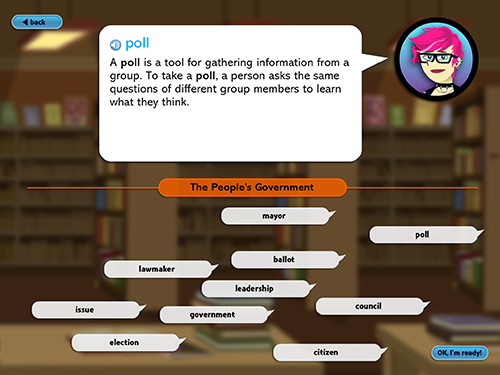 Some years ago as an SLP in the elementary school setting, I was informed by a colleague of Isabel Beck’s revolutionary approach to targeting vocabulary. In the book Bringing Words to Life: Robust Vocabulary Development, co-written with Margaret McKeown and Linda Kucan, the authors describe a methodology for building vocabulary revolving around key principles...

Tool Tuesday: THINKING about our Summer Study Series!
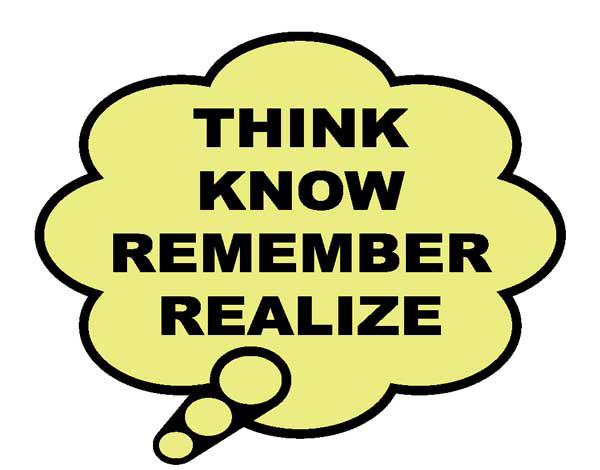
In my work with students, I have become particularly interested in incorporating that beautiful thought bubble icon on Story Grammar Marker®. I find it an elegant icon, serving to scaffold both complex language (I remembered that it was the last week of school contains an embedded clause) and perspective taking, a skill endorsed by advocates of neurodiversity affirming approaches. For this month’s post, I traced a source through Anna Vagin’s work, as she has also provided many resources on working with mental state verbs (MSVs)...

Tool Tuesday: Gratitude is a Little Story (With Typable Lesson Material!)
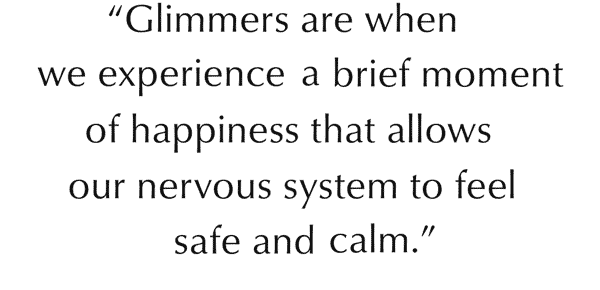
I almost dislike writing about gratitude at Thanksgiving time, as it is a practice that is self-regulating all year round. It is well documented that regularly steering our thinking toward gratitude helps override our brain’s negativity bias and train ourselves to notice positive elements of life, with influence on our mood, and therefore our executive functioning. Recent discourse around gratitude has created the term “glimmers,” serving as the opposite of “triggers.” Glimmers are small observations that help calm our nervous systems....

Downloadable Lesson Material


Tool Tuesday: Summer Study Series Part 2— “Ideas on Scaffolding Play through Narratives”
This month we will look at a study using play contexts to build narrative language. It’s notable that since the publication of this 2020 study, “Believing in Make‐Believe: Efficacy of a Pretend Play Intervention for School‐Aged Children with High‐Functioning Autism Spectrum Disorder,” there have been some significant shifts in our field’s focus towards neurodiversity-affirming language and approaches. For example, we should avoid stigmatizing labels such as “high-functioning”...


Tool Tuesday: Need a quick assessment tool? Try the CUBED!
I have been serving an adjunct role at Boston University for 5 semesters providing supervision to graduate students in their first clinical experiences in the in-house clinic. One of the routines for the semester is to teach and use processes for obtaining baseline and post-treatment data. It was by equipping students in this manner that I discovered the availability of the CUBED, along with the previously mentioned SLAM Cards. The CUBED is a “family of screening and progress monitoring tools” that includes a huge package of graded story samples (levels K-8) with narrative language listening and reading materials and measures....


Tech Tuesday/Summer Study Series: Narrative Language and Social Emotional Programming
“Interjections” has always been my favorite Schoolhouse Rock song, and I am sure we have some we would like to utter about summer being (almost!) over. But it is always good to return to work with a sense of purpose, right? It has been fun writing this year’s Summer Study Series and I thought this last piece was particularly relevant to our roles in being part of a collaborative community in schools. Engaging minds and hearts: Social and emotional learning in English Language Arts (click for full free PDF article) is an honest, insightful look at SEL programming and has helpful suggestions for its integration in ELA classes. To me, though not explicitly stated here, it highlights the role of narrative language intervention and applications of Story Grammar Marker® and the Critical Thinking Triangle in helping our students unpack stories to learn from the higher level elements of feelings, plans and mental states. Though this article relates to such instruction in Canada, it is just as relevant to schools in the USA...


Tech Tuesday/Summer Study Series: The Moral of the Story is…
 As someone who loves themes and context, I was thrilled to find a particular study on assessment and intervention with FABLES to include as this entry in the 2022 Summer Study Series! This resource made me think back to last year’s discussion of using moral dilemmas in narrative language and social cognitive therapy activities. This post includes the advantage of having many adaptable materials to offer you! Specifically, we are talking about Philosophy for Adolescents: Using Fables to Support Critical Thinking and Advanced Language Skills (Nippold and Marr, 2022), an extensive article describing the authors’ work in assessing and intervening in language and critical thinking skills through fables...


Tech Tuesday/Summer Study Series: Narrative Meta-Analysis!
 With much of the USA wrapping up the 2021-22 school year, it’s time to embark on another summer study series. Naturally, each post will have a tech tie-in with a practical resource as well. First up, I was super excited to tell Maryellen and Sheila about a meta-analysis on narrative language interventions from October 2021 and have been eager to write about it here. A meta-analysis is considered among the highest levels of evidence and is a study of studies so to speak, applying criteria to include research on a topic and determining effect sizes of interventions. The study in question, Interventions Designed to Improve Narrative Language in School-Age Children: A Systematic Review With Meta-Analyses (Pico, Prahl, Biel, Peterson, Biel, Woods & Contesse) was published in ASHA’s Language, Speech and Hearing Services in Schools and is therefore available to all ASHA members, or ask your friendly SLP for a copy...


Tech Tuesday: Choose Your Own Prob-Narra-Ventures
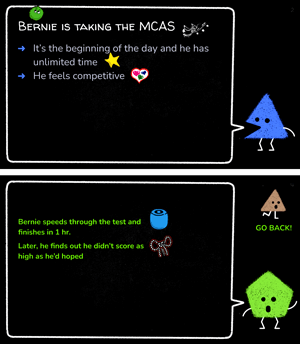 We’ve spoken in this space before (blog link) about the links between narrative language and problem solving that can be scaffolded through the use of Story Grammar Marker® and its relevant icons, particularly the digital kit. Moveable icons are very useful in guiding thinking and discussion when bringing students back to a relevant detail (or story element) that they may not have been considering. See also the work of Westby and Noel (2014) on the connections between story and problem solving. Recently I have been working with several students on test-taking skills and strategies, a process in which it is helpful to address the thought processes, self-talk, as well as social cognition and self-regulation that underlie this situation...


Tech Tuesday: Summer Study Series #4, Be Principled!
 In this, our last entry in 2021’s Summer Study Series, we’ll review a recent article from leaders in the field who present a very helpful set of 10 principles for narrative intervention that will guide you in this new school year. Additionally, several strategies for leveraging technology will also be described, as we can consider tech a useful tool, however your service delivery evolves in this unfortunately still-weird educational situation. Spencer and Peterson (2020) detail narrative intervention principles and practice tips in their ASHA-accessible article “Narrative Intervention: Principles to Practice.” I love the trend of incorporating the ever-readable web “listicle” as an element of our research literature...


Tech Tuesday: Summer Study Series #3, Consider the Functional
In July’s entry for 2021’s Summer Study Series, we’ll be looking at the critical overlap between narrative and expository language and our students’ access to the academic curriculum. Meaux and Norris (2018) tackle this topic in a tutorial for Language, Speech and Hearing Services in Schools entitled “Curriculum-Based Language Interventions: What, Who, Why, Where, and How?” I have always appreciated ASHA publications’ “tutorial” articles as I have found them to provide the most functional and practical information to be useful in interventions. The other “functional” consideration with this article is that including a focus on curriculum has always seemed natural to me. There is so much inherent language in school curricula and, from a linguistic perspective, this potential gap in comprehension and expression is why students receive our services...