
Search
174 results found for "sean sweeney"


Gingerbread Characters and Settings

Using the holidays as a context for language interventions can be tough, as it’s important to be inclusive of all cultures and celebrations. From a technology perspective, there just aren’t many great interactive resources about the Festival of Lights (anyone want to make some)? Gingerbread, however, while associated loosely with Christmas, is probably fair game in the public school setting!
Now, while websites with excessive, distracting ads are often something I rule out as a potential therapy resource, sometimes sites that are actually a giant, yet somehow unobtrusive ad can be great...


Two of My Favorite -ERs: ThemeMakER and GlogstER!
ThemeMaker, Mindwing’s expository companion to Story Grammar Marker, helps children break down and produce the more challenging expository text that becomes central to learning as they advance through the grades! I have found that children are more open to working with expository text once they learn that the familiar SGM icons can help them along the way! While each ThemeMaker Expository Text Map (e.g. List, Sequence, Description, Compare-Contrast) is helpful on its own, kids need to be moved toward understanding that ALL of these structures are contained in curriculum discourse and text!
That can seem like an overwhelming task, but it becomes manageable and fun using a recently developed and FREE online tool, GlogsterEDU, a site that tells all students to “poster yourself!” What is a poster, really, but a display of information that utilizes these key expository structures? Using GlogsterEDU, you can choose and research any topic with your students using ThemeMaker maps and icons, then create a “Glog” with pictures, images and graphics, text (structures!) links, and even recorded audio and video if you wish!...
Looking at Expository Discourse Across the Grade Levels
In each of our summer studies posts, we have been looking at recent research articles that may inform your use of Mindwing’s narrative and expository tools as you ease into a new school year. This post will look at a study that examined the expository language of typically developing 5th-9th graders along with their performance on a language elicitation protocol. In this way, the article provided key information about assessment, but also has supportive points for the use of the language structures of ThemeMaker® both in assessment and intervention.
The Rules of the Game: Properties of a Database of Expository Language Samples (Heilmann and Malone, 2014) was written by two researchers working at the university and school district levels, respectively, in order to summarize their efforts at constructing a database to illuminate language skills for this older age group and serve as a clinical basis of comparison. The full article is available via ASHAWire (ASHA’s electronic publications portal) if you are a member.


Kick-Off the Kick-Off
In some recent posts I have described some visual and interactive activities to complement the instruction in It’s All About the Story establishing the concepts of character and setting. In keeping with the sequence of lessons in Mindwing’s Autism Collection, I’d like to move on to a few ways technology can help you introduce the Initiating Event or “Kick-Off “ of a narrative. As the lessons describe, you can discuss how in a particular setting, something happens to characters to “change the ‘Ho-Hum’ day” and start the story! An additional language strategy is to teach the words and phrases that signal a Kick-Off: suddenly, just then, etc. Taking a step beyond the visuals in the lessons, you can teach your students to apply the concept of the Kick-off using a few fun interactive technology resources...


Tech Tuesday: Create Images with Story Elements using AI!
You have probably heard chatter about the potential and possible pitfalls of AI in educational contexts. This month- a simple way to harness the possibilities of AI image generation. Generative AI has been around for many years but has only been recently been made widely available to the public via a variety of webtools. This kind of artificial intelligence is called “generative” for its ability to use growing neural networks to create content, such as novel text, imagery or even music and video. ChatGPT is a recent tool which responds to prompts to create text, and I recently blogged about its usefulness in generating problem solving scenarios–also useful for targeting story elements. Along with ChatGPT, Microsoft’s OpenAI offers DALL-E, an image generator which is able to create pictures from “natural language,” as opposed to code. This is most easily accessed through the Bing Image Creator, a simple tool that develops images from scratch (not search)!...


Tech Tuesday: Finding Story and Other Text Structure in “Minecraft” Education
We have previously discussed the potential of the incredibly popular game Minecraft for developing narrative language skills through the use of Story Grammar Marker®. At that time, I had described the game as potentially too complicated to use as an actual tool in activities, but I have since rethought that. The iPad version ($5.99) will allow you to create a simple “world” (use the Creative mode) and the building interface is easy to learn, operating much like LEGOs. As a result, spaces can be used to scaffold language for describing settings. Minecraft Education, on the other hand, offers a specialized, structured collection of Worlds you can use for both narrative and expository language. The software is available to anyone with a Microsoft 365 account and usable on a laptop, desktop, or again on the iPad...
Bring EPIC Contexts to Your Use of Story Grammar Marker®
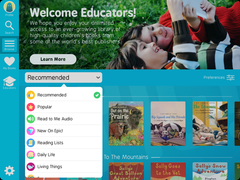
As they are contextual tools, it’s important to consider context when developing narrative and expository language with SGM® and Thememaker®, respectively. Picture books naturally make terrific contexts to work on narrative at a range of developmental stages and teach identification and use of expository text structures. This summer, while you are away from your school libraries, you can check out the gold mine of contexts that is the EPIC! Unlimited Books for Kids app (free for iPad). When you launch the app, sign up for an educator account (also free) and you will have access to an amazing library of picture and chapter books from leading publishers such as Harper Collins, National Geographic and MacMillan. As the app claims to be, “it’s like a Netflix for children’s books!”...


MindWing Concepts and Instructional Technology
I have long had an interest in how technology can provide context within our interventions, much the same way a storybook can provide context. In this approach to intervention, MindWing's tools have served as essential structure to help my students break down language, (as used with a website that provides information, for example) or organize and produce language (when used in conjunction with a creative “Web 2.0” resource that allows students to save and publish work). To focus on this latter "bottom-up" strategy, I suggest you check out Kerpoof, one of my favorite resources for its versatility and ease of use.
Kerpoof* is a free, interactive website recently acquired by Disney and is basically an online version of Kidpix Studio. Kerpoof's interface allows you to choose a background, characters and other setting elements, and add word/thought balloons and caption boxes (sounding promising?). You can create, share, export or print the resulting pictures or multi-picture story sequences...
Put the Story on Stage with Puppet Pals!

There are a great many easy-to-use apps for iPad that fall into the category of digital storytelling. This may sound like a daunting concept, but digital storytelling is just using technological tools such as digital pictures, video, audio, animation, or drawing in order to convey a story or information. Apps that combine these tools use the intuitive interface of the iPad to bring together different kinds of content in an engaging process of creation — all with your fingertips. Even better, these apps provide a great context to utilize Mindwing Tools such as Braidy, the StoryBraid, Story Grammar Marker, ThemeMaker and their accompanying story or expository planning maps...
The Incredible 5-Point Scale and Narrative Elements

April is Autism Awareness Month, and I wanted to highlight one of my favorite tools that I employ with students with autism spectrum and related disorders: The Incredible 5-Point Scale by Kari Dunn Baron and Mitzi Curtis. The 5-Point Scale is a tool designed to help students understand the confusing, emotional and language-heavy range of human behaviors by boiling it all down to a scale of 1-5. The approach is very versatile and can be applied to many situations and target behaviors, such as emotional state, voice volume or scales to help students grade their responses to everyday occurrences such as a “Participation Scale” within the classroom...
Synergy Between MindWing and Social Thinking
I would first like to emphasize the concept of Friend Files, described in Michelle Garcia Winner’s Think Social: As Winner says, it is expected that we remember certain things about people we know by keeping an imaginary file in our brain (and first of all it is helpful to label our friend file with the person’s name)! Drawing from that file allows us to: a) use the oft-positively-received behavior of showing interest and b) have a wealth of conversation starters. Maryellen writes in It’s All About the Story about a kiddo we probably all know: “To make conversation, it would be essential for John to know that the classmate liked baseball, but more specifically liked the Red Sox, and disliked the Yankees.”...


Tool Tuesday: 3 Prompts for ChatGPT to Facilitate Narrative Teaching
Artificial Intelligence (AI) is, of course, one of the hottest topics in technology these days. Its recently emerging abilities are producing a mix of excitement and anxiety for the ways that it is disrupting education and other fields, but like many technology developments, it should be viewed as a tool. You may not know where to start, but one path is using ChatGPT’s free tools along with prompts that can help you plan narrative language interventions. ChatGPT is a chatbot from OpenAI (owned by Microsoft) using generative AI, which is a form of artificial intelligence that can create text, images, video and other media...


Tech Tuesday/Summer Study Series: Combining Narratives with Play Yields Social Competencies!
June has at this point busted out all over! I know I am wrapping up my school year work while many of you may have been lounging for a few weeks, I hope. For this month’s entry in our Summer Study Series we are diving into the strong connection between narrative language and social learning. But speaking of Summer Studies related to narrative and social development, don’t miss MindWing’s Summer Course: Social Communication with SGM®: Social Emotional Learning, Language Processing, & Pragmatics—July 25 & 26, 2023! While from a few years back, this month’s article presents terrific and easy to implement ideas for the PK-primary school level. Let’s delve into “Using a narrative- and play-based activity to promote low-income preschoolers’ oral language, emergent literacy, and social competence” from the Early Childhood Research Quarterly (Nicolopoulou, Cortina Ilgaz, Brockmeyer Cates & de Sá, 2015)...


Tech Tuesday: Jeopardelaboration!
 We have previously discussed in this blog the importance of the “GIVE A STORY TO GET A STORY” technique. Described by Hadley (1998) in her wonderful article on naturalistic language sampling, and linked to other resources, conversational mapping involves providing a story about your own life which can help elicit the same from your students. This technique provides a great model and also a pragmatic context for narrative intervention, no matter the “size” of your story. Recently, I had a rather big story to share with my students. After many years of trying, I made it through the audition process to compete on Jeopardy!...


Tool Tuesday: THINKING about our Summer Study Series!
In my work with students, I have become particularly interested in incorporating that beautiful thought bubble icon on Story Grammar Marker®. I find it an elegant icon, serving to scaffold both complex language (I remembered that it was the last week of school contains an embedded clause) and perspective taking, a skill endorsed by advocates of neurodiversity affirming approaches. For this month’s post, I traced a source through Anna Vagin’s work, as she has also provided many resources on working with mental state verbs (MSVs)...

Tool Tuesday: Gratitude is a Little Story (With Typable Lesson Material!)
I almost dislike writing about gratitude at Thanksgiving time, as it is a practice that is self-regulating all year round. It is well documented that regularly steering our thinking toward gratitude helps override our brain’s negativity bias and train ourselves to notice positive elements of life, with influence on our mood, and therefore our executive functioning. Recent discourse around gratitude has created the term “glimmers,” serving as the opposite of “triggers.” Glimmers are small observations that help calm our nervous systems....

Downloadable Lesson Material


Tool Tuesday: Summer Study Series Part 2— “Ideas on Scaffolding Play through Narratives”
This month we will look at a study using play contexts to build narrative language. It’s notable that since the publication of this 2020 study, “Believing in Make‐Believe: Efficacy of a Pretend Play Intervention for School‐Aged Children with High‐Functioning Autism Spectrum Disorder,” there have been some significant shifts in our field’s focus towards neurodiversity-affirming language and approaches. For example, we should avoid stigmatizing labels such as “high-functioning”...


Tool Tuesday: Need a quick assessment tool? Try the CUBED!
I have been serving an adjunct role at Boston University for 5 semesters providing supervision to graduate students in their first clinical experiences in the in-house clinic. One of the routines for the semester is to teach and use processes for obtaining baseline and post-treatment data. It was by equipping students in this manner that I discovered the availability of the CUBED, along with the previously mentioned SLAM Cards. The CUBED is a “family of screening and progress monitoring tools” that includes a huge package of graded story samples (levels K-8) with narrative language listening and reading materials and measures....


Tech Tuesday/Summer Study Series: Narrative Language and Social Emotional Programming
“Interjections” has always been my favorite Schoolhouse Rock song, and I am sure we have some we would like to utter about summer being (almost!) over. But it is always good to return to work with a sense of purpose, right? It has been fun writing this year’s Summer Study Series and I thought this last piece was particularly relevant to our roles in being part of a collaborative community in schools. Engaging minds and hearts: Social and emotional learning in English Language Arts (click for full free PDF article) is an honest, insightful look at SEL programming and has helpful suggestions for its integration in ELA classes. To me, though not explicitly stated here, it highlights the role of narrative language intervention and applications of Story Grammar Marker® and the Critical Thinking Triangle in helping our students unpack stories to learn from the higher level elements of feelings, plans and mental states. Though this article relates to such instruction in Canada, it is just as relevant to schools in the USA...


Tech Tuesday/Summer Study Series: The Moral of the Story is…
 As someone who loves themes and context, I was thrilled to find a particular study on assessment and intervention with FABLES to include as this entry in the 2022 Summer Study Series! This resource made me think back to last year’s discussion of using moral dilemmas in narrative language and social cognitive therapy activities. This post includes the advantage of having many adaptable materials to offer you! Specifically, we are talking about Philosophy for Adolescents: Using Fables to Support Critical Thinking and Advanced Language Skills (Nippold and Marr, 2022), an extensive article describing the authors’ work in assessing and intervening in language and critical thinking skills through fables...


Tech Tuesday/Summer Study Series: Narrative Meta-Analysis!
 With much of the USA wrapping up the 2021-22 school year, it’s time to embark on another summer study series. Naturally, each post will have a tech tie-in with a practical resource as well. First up, I was super excited to tell Maryellen and Sheila about a meta-analysis on narrative language interventions from October 2021 and have been eager to write about it here. A meta-analysis is considered among the highest levels of evidence and is a study of studies so to speak, applying criteria to include research on a topic and determining effect sizes of interventions. The study in question, Interventions Designed to Improve Narrative Language in School-Age Children: A Systematic Review With Meta-Analyses (Pico, Prahl, Biel, Peterson, Biel, Woods & Contesse) was published in ASHA’s Language, Speech and Hearing Services in Schools and is therefore available to all ASHA members, or ask your friendly SLP for a copy...


Tech Tuesday: Choose Your Own Prob-Narra-Ventures
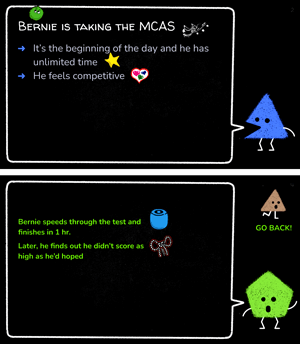 We’ve spoken in this space before (blog link) about the links between narrative language and problem solving that can be scaffolded through the use of Story Grammar Marker® and its relevant icons, particularly the digital kit. Moveable icons are very useful in guiding thinking and discussion when bringing students back to a relevant detail (or story element) that they may not have been considering. See also the work of Westby and Noel (2014) on the connections between story and problem solving. Recently I have been working with several students on test-taking skills and strategies, a process in which it is helpful to address the thought processes, self-talk, as well as social cognition and self-regulation that underlie this situation...


Tech Tuesday: Summer Study Series #4, Be Principled!
 In this, our last entry in 2021’s Summer Study Series, we’ll review a recent article from leaders in the field who present a very helpful set of 10 principles for narrative intervention that will guide you in this new school year. Additionally, several strategies for leveraging technology will also be described, as we can consider tech a useful tool, however your service delivery evolves in this unfortunately still-weird educational situation. Spencer and Peterson (2020) detail narrative intervention principles and practice tips in their ASHA-accessible article “Narrative Intervention: Principles to Practice.” I love the trend of incorporating the ever-readable web “listicle” as an element of our research literature...


Tech Tuesday: Summer Study Series #3, Consider the Functional
In July’s entry for 2021’s Summer Study Series, we’ll be looking at the critical overlap between narrative and expository language and our students’ access to the academic curriculum. Meaux and Norris (2018) tackle this topic in a tutorial for Language, Speech and Hearing Services in Schools entitled “Curriculum-Based Language Interventions: What, Who, Why, Where, and How?” I have always appreciated ASHA publications’ “tutorial” articles as I have found them to provide the most functional and practical information to be useful in interventions. The other “functional” consideration with this article is that including a focus on curriculum has always seemed natural to me. There is so much inherent language in school curricula and, from a linguistic perspective, this potential gap in comprehension and expression is why students receive our services...


Tech Tuesday: More Jamboard and Mixed Methodologies
 Over the past months, I have been working with students online and finding new ways to use this Jamboard tool...the sky’s the limit! One effective way is to integrate methodologies like Story Grammar Marker® into the use of Jamboard as a visual support to elicit and scaffold language. Audiobooks from Epic! Audiobooks for Kids can be chosen for short segments or chapters that make for a zone-appropriate lesson blending auditory comprehension with narrative language intervention. You may not be willing to go to bathroom-humor-lengths to engage your students at this point, but I am! So, since they asked for Captain Underpants (Dav Pilkey), I checked it out, and delivered!...


Tech Tuesday: “Jam” with SGM®
 Get ready to Jam! This past year, Google introduced the interactive and collaborative tool Jamboard, which could not have come at a better time given the pandemic and our need to engage students via distance learning. Jamboard allows for quick and easy co-creation of visuals in a shared space via addition of images, sketches, text boxes and post-its. Therefore, it is a great venue for making interactive scenes, brainstorming, and generating language on graphic organizers. To access Jamboard, follow the steps you would to get started with any Google tool: go to the “waffle” in the upper right corner of a Google space such as Gmail or Drive, and select Jamboard...


Tech Tuesday: “Woke” Stories, Using the Critical Thinking Triangle® with Current Events
 This fall I have had the great pleasure of working with a student who is very engaged in teletherapy and has a special interest in topics related to social justice. His “woke” nature has served him in keeping informed about the pandemic and stories related to the Black Lives Matter movement, but like many of our students, he can miss important elements of these narrative events. ASHA outlines that incorporating Client Values into treatment is an important component of Evidence-Based Practice (EBP). This is defined as “the unique set of personal and cultural circumstances, values, priorities, and expectations identified by your client and their caregivers.” This aspect, as well as the importance of engaging textual contexts and targeting narrative for students with ASD, led me to conduct a weekly current events activity through teletherapy for his sessions...


Tech Tuesday: Summer Study Series on an RCT of Narrative Intervention for Adolescents
 We look at an exciting piece of research from last summer (July/August 2019), Improving storytelling and vocabulary in secondary school students with language disorder: a randomized controlled trial* (full article available at link). In this article, Joffe, Rixton and Hulme describe a randomized controlled trial (RCT) involving both narrative and vocabulary intervention for secondary students in the UK. It is notable because RCTs in language intervention are relatively rare, and considered a high level of evidence. ASHA, on a scale of evidence quality, rates “well designed randomized controlled trials” as level 1b, 2nd on a 6-point scale of evidence; these are research studies in which intervention groups are compared to a control group in which no intervention was provided. Additionally, interventions for adolescents with persistent language problems are less researched, so this study is an important one!...


Tech Tuesday: ASHA Convention Wrap-up, Part 1
 This year brought those of the speech-language pathologist ilk to Orlando, which I have come to think of as the land of simulated Character and Setting. Inside the more sedate but still stimulating conference halls, MindWing’s tools were shared by a number of presenters including me! In Developing Expressive Language In Preschoolers: Strategies to Increase Utterance Length and Complexity (Mentis, Howland, Graham), the authors described their integration of Braidy the StoryBraid® into a language and literacy program for preschoolers, providing graduate student clinicians with wonderful experience in targeting language in the context of stories and play. The presenters recommended a number of books used within their program, moving from emphasis on simple to more complex story grammar and microstructure...


Tech Tuesday: More on Memes (Think Halloween!)
 Today’s kids really like memes, digesting them from internet spaces we are too cool to inhabit! Therefore, they serve as a textual or language-infused genre that we can exploit for our students’ engagement. Often a meme suggests some element of a narrative that serves to facilitate a discussion or mapping of other elements. We can compare and contrast these narrative forms with exposition, or explaining ideas (see Thememaker®). When critiquing narrative works such as movies, it’s always felt to be a no-no to have too much exposition, or telling (not showing), such as when a character suddenly explains the mystery inherent to a plot...


Tech Tuesday/Summer Study Series: Because and So Science
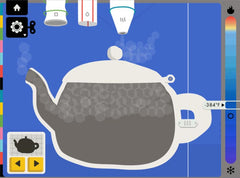 For July’s entry in the “Summer Study Series,” we’ll be looking at some cool connections to the science curriculum in addressing the macrostructure and microstructure of language. Our posts this summer are summarizing recent research related to narrative and expository language and Story Grammar Marker®/ThemeMaker® to give you some scientific thought for summer. To set the tone, there are some natural connections between the SGM® and ThemeMaker® methodologies and using science content with students. Narrative and expository elements give a framework for summarizing story and information, elaborating, focusing on main ideas and reducing the load on working memory by providing a scaffolded structure. The scientific method itself, moving from observation (Character/Setting), planning and hypothesizing, following experimental steps, and developing a conclusion, can be reframed using the Story Grammar Marker® as is demonstrated in the original SGM® manual...


Tech Tuesday/Summer Study Series: An Evidence-Based Approach to Building Inferential Skills through Narrative Texts

This summer we are bringing back the “Summer Study Series!” This series of posts will provide overviews of recent research related to narrative language and Story Grammar Marker® in order to give you “food for thought” to digest relevant to clinical techniques in the upcoming school year. I was quite excited to discover that a recent study on developing inferential language has a direct connection to SGM®, as MindWing’s icons were used in story mapping activities included as part of the studied intervention. Dawes, Leitao, Claessen and Kane (2019), developed and studied a specific intervention sequence for improving inferencing in students with Developmental Language Disorder (DVD). Some summarized points from the study are as follows...


Tech Tuesday: Problem-Solving Approach Using Story Grammar Marker® Icons
 Of late, I’ve unfortunately had a number of students who are needing to deal with getting teased or bullied. This is a tough area to intervene in because it is so sad and frustrating to see a young student being victimized, particularly when their social learning and communicative challenges likely are the reason why. It’s also difficult because we can’t really just provide one way to respond. “Ignore it,” being realistic, oftentimes does not work. Over the past few years, I have worked in these situations around problem-solving approaches, Story Grammar Marker® providing a great tool in the process. Problem-solving can be considered to be a forked format, with SGM®’s icons providing a guide to consider the who, where and when the problem involves, the nature of the problem itself, feelings and internal states/thoughts resulting, and the plan (in the case of teasing, to end it)...


Tech Tuesday: Summer Study and Event Narratives
 I know some of you are already in school, so forgive the “Summer Study” aspect of this post, as I am holding on to the last days of summer (which goes until September, anyway). I have been impressed of late with ASHA’s publication of “tutorial” style articles that offer a synthesis of research and practical ideas and techniques for intervention. One of these recent articles is particularly relevant to the topic of this blog and to MindWing’s tools for narrative intervention: Telling Tales: Personal Event Narratives and Life Stories (Westby and Culatta, 2016). In this post I will discuss this article along with tech tools particularly related to the intervention suggestions around eliciting and scaffolding event narratives. Westby and Culatta set out to emphasize the importance of personal event narratives...


Tech Tuesday: More on Social Detective work from Social Thinking® and Social Skill Builder
 In April, Autism Awareness and Acceptance month, we have a specific focus on the population of students with autism spectrum disorders, awareness of their strengths and challenges, as well as strategies to help them be successful. This diagnosis often accompanies difficulties in social attention and situational awareness, as well as the ability to use narrative language to describe situations. And what is a situation? Essentially it comprises people (Characters) in a place and time (Setting) when events typical to the situation or unexpected for the situation (Kick-Off) occur. Besides the clear tie-in with Story Grammar Marker® in this regard, also see the work of SLPs Sarah Ward and Kristen Jacobsen on the Space, Time, Objects, and People (STOP and Think) model of situational awareness...


Tech Tuesday: Play with Stories!
As we have previously discussed in this blog, play and narrative are inextricably linked (see our post about Braidy the StoryBraid® and overlappings with Social Thinking®’s Incredible Flexible You Program — now titled We Thinkers! and with a new 2nd volume)! “Play Plans” within a group or individual session can emphasize social cognitive concepts that are important during play such as “sharing an imagination” but also narrative elements that are acted out or realized in the process of play. A great series that can be used to emphasize early storytelling and play skills can be found in the apps from Sago Mini. These apps comprise contextual “sandboxes” fostering exploration and experimentation as characters are moved around a setting, resulting in interactive events. Sago Mini’s line features apps that allow interaction with characters such as superheros and neighborhood friends, and settings such as space, a forest, a construction site, and a cafe.


Summer School Explorations with Google Earth
 Setting is a key area of instruction for students on the autism spectrum not only because they tend not to observe the “expected behaviors” or script for a given setting, but also because they often leave out details about Setting when
  telling stories to others, thus resulting in loss of a point of reference and confusion on the part of their listener. Students in social thinking/skills groups or individual treatment would therefore benefit from building descriptive skills through the use of the Setting Map contained in It’s All About the Story and other SGM resources. Once again, as visual and kinesethetic learners, working with resources they can see and manipulate assists in building these skills...


Create Visual “Explanimations” to go with your Expository Lessons
 On this Technology Tuesday, our monthly post in which we describe a simple technology resource that can be useful in integrating MindWing’s tools in your work, I wanted to align with recent posts describing resources for expository language, specifically listing and describing. As these posts describe, almost any text can be used as a context for analyzing expository language (see also the many engaging expository texts in the EPIC! app). In addition to Thememaker® expository language maps, a number of apps serve as a “blank slate” for you to create a short-or more extensive—activity targeting these language structures.
Simple Machines Offer Language Learning Opportunities
This week I am blogging to tell you about a tech resource that is really simple to use - Chicago's Museum of Science and Industry's Simple Machines Game. This site is a perfect example of how resources that were not designed for SLPs actually provide wonderful language-learning opportunities. It is also one of the best-designed- and totally one of the cutest- sites I have seen of late. Additionally, it presents the perfect blend of narrative and expository structures as a context for intervention, and concerns a key and oft-tested (on state assessments) curriculum topic- simple machines such as lever, wheel-and-axle, etc.
Exploring Settings with Google Earth
In this post, I will be continuing to describe resources to supplement the lessons in It’s All About the Story, and moving on to the element of Setting. Setting is a key area of instruction for students on the autism spectrum not only because they tend not to observe the “expected behaviors” or script for a given setting, but also because they often leave out details about setting when telling stories to others, thus resulting in loss of a point of reference and confusion on the part of their listener. Students in social thinking/skills groups or individual treatment would therefore benefit from building descriptive skills through the use of the Setting Map contained in It’s All About the Story and other SGM resources...
The Zimmer Twins and Stepping Up Narrative Complexity!
I am going to open this post with a language sample obtained from a fifth grade student in 2006, an attempt to retell an episode of the series Full House.
And um something that happened was when this girl named Michelle and this guy Jesse, it was Michelle’s birthday. And Jesse and Michelle got stuck in a gas station and she missed her party.
And um they were there all day, but then finally it opened the next- no it opened a lot later. So um they went back to the house and they had their party and she got an elephant and she got to ride it and all her friends and she got, she felt better. And that’s it...
Story Patch: A Great Context to Teach Narrative with Story Grammar Marker
There have been a number of apps for iOS (iPad/iPod/iPhone operating system) that have been released in recent months that seem like they were created for use with Story Grammar Marker! Digital Storytelling apps such as Story Patch allow children to create stories while having an emphasis on narrative structure, with choices about character, setting and actions. Students with language disorders will need assistance with organizing, expanding, and adding complexity to their narrative and sentence structure, and that is where you and the SGM come in!
In this video, I give a quick walkthrough of Story Patch (iPad only, currently only $.99- yes, that’s 99 CENTS) and its choices for story creation. You’ll see how its “Create a Story with Help” mode is a great opportunity...


Using QR Codes for Spooky Narrative Development

Over on my blog SpeechTechie this month, I am discussing in a series of posts the incredibly useful technique of using QR codes in language interventions. QR codes, which look like this (at left) were born in the world of marketing (you may have seen them on ads about town) but are making their way into educational settings as an attention-grabbing tool. QR codes can be created very easily and printed, then scanned with free apps available for your smartphone or iPad. When scanned, the app will show text that you entered or a link to a website...
Story Mapping and Seasonal Cheer
The holiday season creates a lot of excitement for our students, no matter what holiday they celebrate! This mood can lead to a lot of language and, of course, the opportunity to develop narrative using Story Grammar Marker®. In this post, I’ll be mentioning a couple of resources you can use to acknowledge the season (in varying degrees of sectarianism) while reinforcing use of narrative elements and SGM® icons.
The first is a brief Pixar-like animated short I stumbled across in my blog-surfing routines; I am so glad I found it! As I described in a previous post, wordless videos can be an engaging way to have students “fill in” the language that is not used in the video...


StoryBird
 StoryBird is very helpful for using technology to develop story telling and story writing skills. However, while providing artwork and a very simple platform for adding text, it does not provide the narrative structure necessary for writing the actual text of the story. Using Story Grammar Marker, students can have the structure to know what parts go into the story. The Common Core State Standards call for the blending of narrative and expository text in lessons as well as integrating technology and multimedia. The following lesson demonstrates it...
Complete and Share SGM® Story Maps (Paperless!) with Google Drive
 The MindWing Narrative and Expository Maps are to me an invaluable part of the visual language tools within the Braidy the StoryBraid®, Story Grammar Marker®, and ThemeMaker® programs. Of course the SGM iPad App gives you one option to work with the icons in these programs digitally while scaffolding language development--but it’s not the only way!
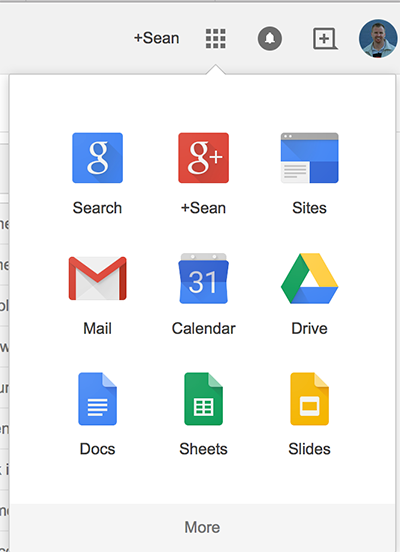
Google Apps for Education is a resource that is now implemented in many public school districts, allowing for digital creation, storage, sharing, and collaboration on word processing and other types of documents. The power of Google Apps (a.k.a. “Drive” or “Docs” — they all pretty much mean the same thing) is that it gives you access to your files from any computer or device, and allows you to share important information between key staff members without handing off any paper! If your district has not implemented Google’s tools, you can also access all of them for free with a Google account (i.e. if you have a Gmail, you can just navigate to your Google Drive). Click on the “matrix” of squares in any Google account to navigate between apps, including Google Drive...

Tool Tuesday: The Gift of Words!
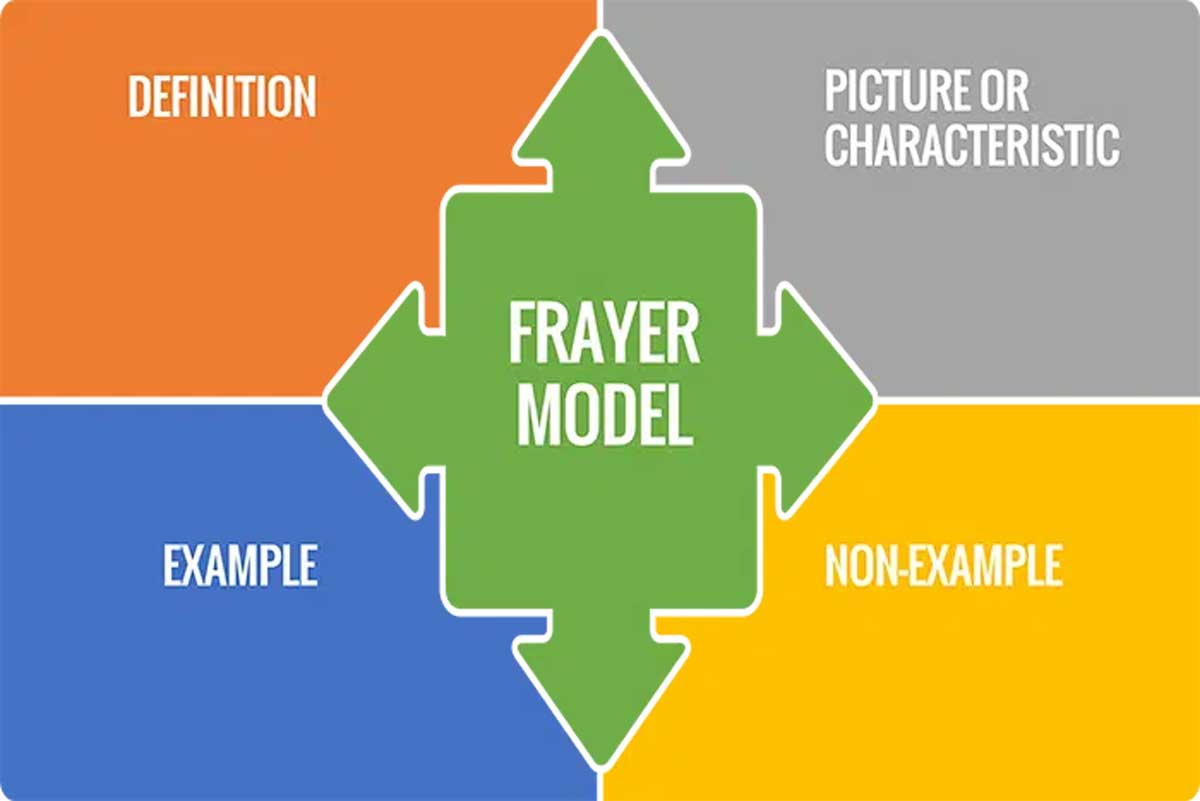
As an SLP, I have always loved working with vocabulary development. Unlocking new words for students is so demonstrably gratifying. We can imagine that they will encounter new words later in their listening, reading, or general daily experiences with confidence, and hopefully find them to be tools to express themselves and even solve problems. Vocabulary is also an easy channel to target in the course of narrative intervention, context being a key to word learning. Targeted vocabulary can be part of the microstructure elements we emphasize...


Tool Tuesday: Tuning in to Whole-Class Instruction
The article discussed this month interested me in particular because, although in private practice and university settings currently, I have a long history as a school-based SLP. As my caseload grew, I found huge value in forging partnerships with teachers to deliver a portion of services in their classrooms with co-led lessons, or simply taking the lead for 30 minutes a week. The teachers appreciated my efforts to tie in with curriculum topics and also providing them with tangible strategies they could carry over with students to support their language development.