
MindWing Concepts Blog
Tech Tuesday: Back to School Part 3—Considering Narrative Language Applications of Google Tools
 Let’s consider some uses of one of the most commonly applied EdTech Tools: Google’s Apps or “G Suite.” G Suite has become a go-to within schools for a number of reasons, including its price (free), versatility and ease of use of productivity tools such as Docs and Slides, word processing and presentation creators, respectively. Additionally, G Suite is easily used on inexpensive Chromebook computers, which allow schools to put technology in a wide range of hands across the day. Chromebooks are easy to manage and essentially only run a Chrome web browser, making them a good match for use with the web-based G Suite. SLPs and literacy interventionists may see G Suite as too basic to consider for storytelling and narrative language opportunities. However, the opportunities to use images, drawings, and other visual supports are varied, easy to use, and worth considering—particularly when seeking to implement MindWing’s methodologies such as Story Grammar Marker® and ThemeMaker® within classroom settings, G Suite features will make it easy for students to apply what they are learning about narrative and expository language!...


Blending Narrative and Expository Text with “Alaska’s Three Bears”
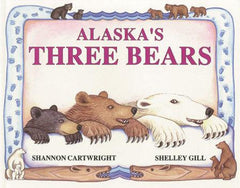 Maryellen recommended this book at a workshop I attended many years ago, and I found so many uses for it when our second, third, fourth, and fifth graders began to explore narrative and expository text structures. Using the picture book Alaska’s Three Bears shows the flexibility of the SGM® for both narrative and expository texts. She shared lessons and activities for use with grades K-5 and noted that this book could be used with a variety of grade levels (2-5) as it helped to support a number of her goals and objectives as a Language Arts Teacher. There is both a story and expository information presented. The book is one that can be used with a variety of goals/objectives in mind, during whole-group and/or small-group instruction, and with a wide span of grade levels...


Tech Tuesday: Back to School Part 2—Five Great Resources for Demonstrating Narrative and Informational Expression
 Using interactive apps and websites, we can help students deconstruct discourse and see its essential parts. However, technology can also provide a space—a blank slate, so to speak—that we can use to help students use narrative and expository elements and icons to build language through engaging mini-projects using apps for creation. The realm of “digital storytelling” has expanded, and at the same time became more simplified with the arrival of easy-to-use apps. iPad and Android “creation” apps (oft referred to as apps that allow students to “show what they know”) can be used to make picture collages, books, animations or videos that tell a story or give information...


Spiders! 5 Books, Resources and Activities
 As so often happens when I see a certain book or project, it reminds me of particular lessons that I taught while teaching at the former Juniper Park School in Westfield, MA. A recent display of books on spiders at our local library did just that. Below are some ideas on spider-related books that you may want to try this summer or tuck them away in your files for future use. In addition to other resources, several of the selections below are Anansi trickster tales which were first told by the Ashanti people in Ghana. We begin our lesson suggestions with one of the Anansi stories adapted and retold by Eric A. Kimmel and illustrated by Janet Stevens. These were always popular with second and third graders. I liked to use them to reinforce the SGM® complete and interactive episodes and character traits...


Tech Tuesday: Back to School Part 1: 5 Great Resources for Deconstructing Narratives and Information
 Technology resources provide context through visuals and text, and these can be an extremely engaging way to introduce narrative and expository language structures to build comprehension. We can, along with our students, analyze the content of apps and websites in a process of co-engagement: What do you see? What do I see? MindWing’s narrative language icons and maps (Story Grammar Marker®) and corresponding expository language structures (ThemeMaker®) will lend a strategic and specific focus toward building the comprehension of discourse as you explore these resources! EPIC! Books for Kids is a clearinghouse of digital texts that are free for educators (sign up for the Educator Account). This resource is accessible on the web, iPad or even Apple TV, and contains 25,000 books, providing an experience similar to walking through a Scholastic Book Fair. The books are searchable by topic...


Two Summer Books (and More) with Feelings!
 As a former teacher of 38 years, I know summer is a time for educators to catch some much-needed R&R with family and friends. It is also a time to reflect on the past school year; what we thought went well and what changes we can make in the upcoming school year to improve student learning. I am always on the lookout for new books/materials to add to my lessons and recently came across two books that may interest you...